
Kudditji Kngwarreye
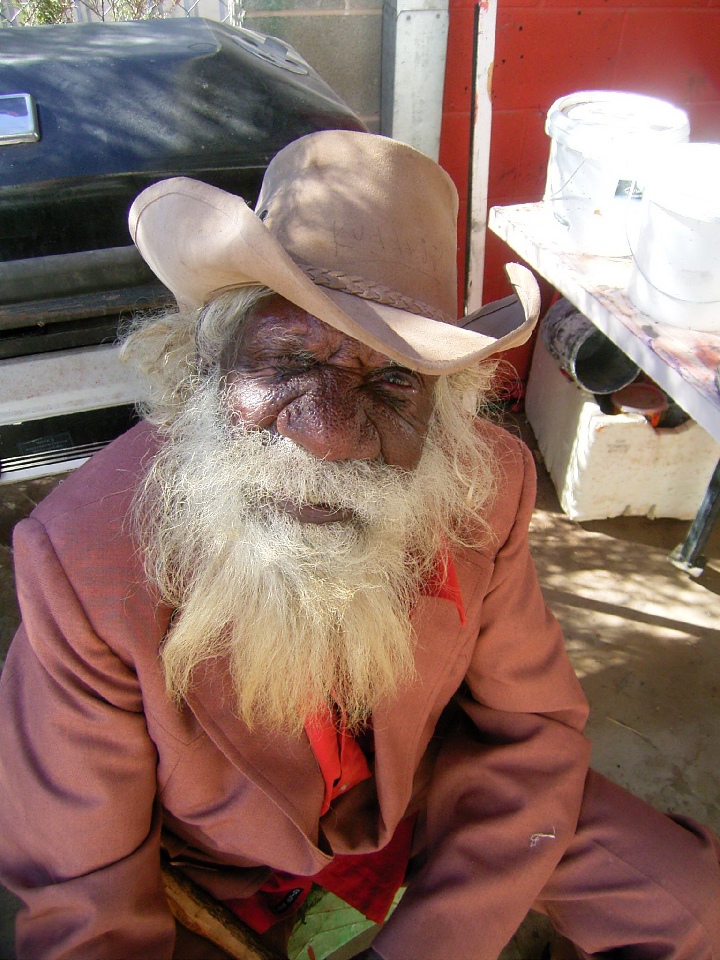
DOB:
1938 - 2017
Born:
Lallguora, Utopia, NT
LANGUAGE GROUP: Anmatyerre
COMMUNITY: Utopia, NT
Kudditji Kngwarreye (pronounced goo-beh-chee and called Goob) has been one of our superstars since Kate Owen Gallery opened over 10 years ago. In that time we have seen Kudditji take his place as one of Australia's foremost indigenous artists.
Whilst they were not blood related, Kudditji was recognised as a skin brother of the late Emily Kame Kngwarreye . While Kudditji began painting around 1986, his highly intuitive and gestural method of painting was not welcomed by galleries, and he was encouraged to paint in the fashionable style of the time, executing works with detailed infill. After seeing Emily catapult on to the Australian and International Art scene, Kudditji resumed his exploration in to the abstract which he continued until he 'put down the brush' in 2015. Kudditji participated in many international exhibitions and became known for his depictions of his Dreamings; their abstract imagery, bold colour use and intuitive interplay with space and form has cemented his name in the Aboriginal art scene.
But being a ground-breaking contemporary Indigenous Australian artist was just one chapter in this old man's life story. He had a traditional bush upbringing and worked as a stockman and mine worker for many years. He was also a traditional custodian of many important Dreamings, of the land and Men's Business ceremonial sites located in his country at Utopia Station, about 230 km north east of Alice Springs.
During his younger days Kudditji frequently took the young boys/men hunting emu in these lands, merging tradition with practice as part of their initiation as men. It is the land of this experience that Kudditji painted his 'Emu Dreamings' and his 'My Country' works.
Over the 10 years that Kudditji has been represented at Kate Owen Gallery, his Dreamings have profoundly evolved into extraordinary juxtaposed colour fields, startling in both composition and hue. Harsh or soft and often surprising to the Western eye, his painterly style maps out the creation, his country, and his traditional Dreamings. While his spatial, painterly compositions have a Rothko-esque quality to them, the work of this Anmatyerre elder from the Northern Territory is clearly a unique Australian voice.
While painting, he could be heard singing - his way of infusing his works with stories of the land; the ancestors, hunts, travels and the food and water of Anmatyerre country. Kngwarreye's songs will continue to echo through his beautiful artworks, which now hang in galleries, private collections, homes and offices all over the world. His passing is a great loss to the art world and to those people who knew him personally or through his paintings