
Emily Kame Kngwarreye
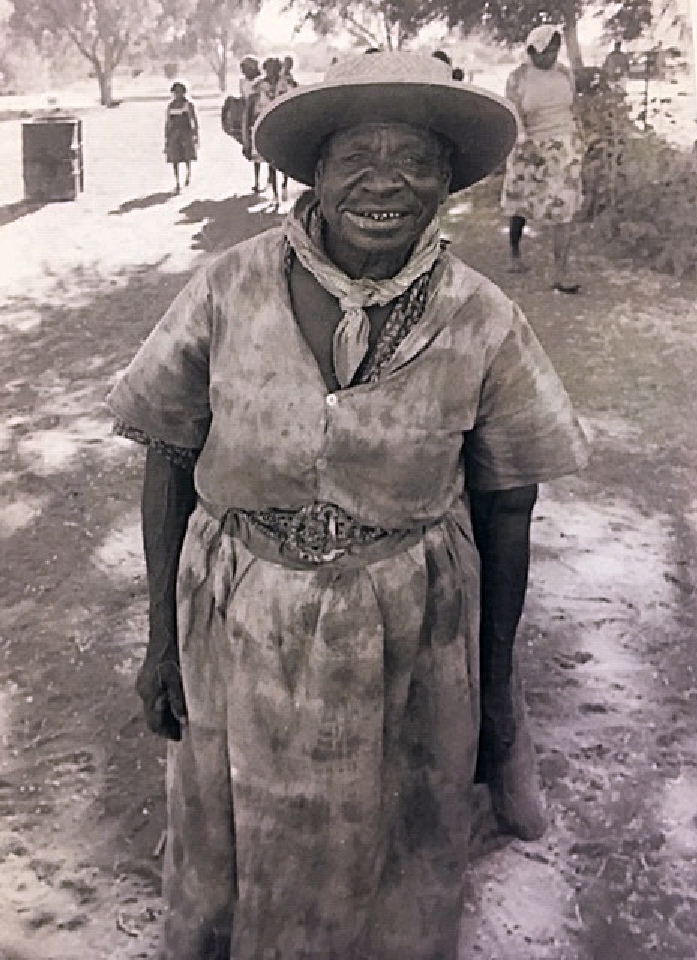
DOB:
1914 - 1996
Born:
Alhalkere, Soakage Bore, NT
LANGUAGE GROUP: Anmatyerre
COMMUNITY: Utopia, NT
Emily Kame Kngwarreye is considered one of Australias most significant artists. Amazingly, she only began painting with acrylics in her late seventies but in a few short years became an artist of national and international standing.
Emily was the first female painter to emerge from an art movement dominated by men and did so in a way that transformed Aboriginal painting. Employing a variety of styles over the course of her eight-year painting career, she painted her Country and sacred Dreamtime stories in a deeply emotional and expressive manner.
She was born 1914 at Alhalkere (Soakage Bore), on the edge of the Utopia pastoral station, approximately 250km north-east of Alice Springs. Alhalkere was her fathers Country, and her mothers Country was Alhalpere, just to the east.
Despite being married twice, she had no children of her own but raised her relative Lily Sandover Kngwarreye and her niece Barbara Weir. Both becoming famous artists in their own right. Other nieces that also became famous artists include Gloria Petyarre, Kathleen Petyarre, Ada Bird Petyarre, Violet Petyarre and Nancy Petyarre.
Well before she became one of its most senior contemporary artists, Emily held a unique status within her community of Utopia. Her strong personality and past employment as a stock hand on pastoral properties in the area (at a time when women were only employed for domestic duties), reveals her forceful independence and trailblazing character.
Her age and ceremonial status also made her a senior member of the Anmatyerre language group. She was a senior custodian of cultural sites of her fathers country. She was considered the Boss Woman of the Alatyeye (pencil yam dreaming) and Kame (yam seed dreaming).
Emily started as a traditional ceremonial artist, beginning painting as a young woman as part of her cultural education. An important component of this education was learning the womens ceremonies, which are associated with in-depth knowledge of the Dreamtime stories and of womens social structures.
This knowledge is known as Awelye in Anmatyerre language. Awelye also refers to the intricate designs and symbols associated with womens rituals. These are applied to the womens upper chest, breasts and arms using fingers or brushes dipped into rich desert ochres.
Aboriginal art outside of ceremonial painting began in Utopia in 1977, when batik-making was introduced to women as part of an extended government-funded education program. In 1978, Emily was a founding member of the Utopia Womens Batik Group. In 1988, the Central Australian Aboriginal Media Association (CAAMA) completed its first project with the Utopia Womens Batik Group. This became an exhibition called Utopia - A Picture Story.
From the beginning, Emilys art stood out from the others. Rather than filling her batiks with Aboriginal symbols, she preferred patterns of layered lines and dots that revealed plant, figurative forms and cell like structures. The 88 silk batiks from this first project were acquired by the Holmes a Court Collection in Perth.
In the same year the CAAMA shop initiated The Summer Project, introducing the Utopia womens batik group to the use of acrylic paints on canvas. Among the 81 paintings completed was Emilys first artwork on canvas, Emu Woman.
Inspired by the many Dreamtime stories of which she was a custodian, Emily employed an extraordinary array of styles over the course of her eight-year painting career.
In her early works, Emily preferred the use of an earthy ochre colour palette, reflecting her experience of using natural ochres during ceremonies. Over time she expanded her repertoire to include a dazzling array of colours found in the desert landscape. Colours are significant in her paintings. Yellow, for example, often symbolises the season when the desert earth begins to dry up and the Kame (yam seeds) are ripe.
Her shifting styles also reveal her self-confidence and willingness to experiment with form, pictorial space and artistic conventions. She drew creatively from the geographic landmarks that traverse her Country and the Dreaming stories that define it. Whenever she was asked to explain her paintings, her answer was always the same:
Whole lot, that's the whole lot. Awelye (my Dreamings), Alatyeye (pencil yam), Arkerrthe (mountain devil lizard), Ntange (grass seed), Tingu (a Dreamtime pup), Ankerre (emu), Intekwe (a favorite food of emus, a small plant), Atnwerle (green bean), and Kame (yam seed). That's what I paint; the whole lot.
This is because she chose to present a very broad picture of the land and how it supports the Anmatyerre way of life. Her artworks embrace the whole life story of the Dreamtime, seeds, flowers, wind, sand and everything. Although her works relate to the modern art tradition, this resemblance is purely visual. The emphasis in Emilys paintings is on the spiritual meaning, based in the tradition of her people.
The evolving styles of Emily Kame Kngwarreyes paintings
Emily started to paint in 1988. Her early style featured visible linear tracings following the tracks of the Kame (Yam Dreaming) and animal prints associated with the Emu Dreaming. Fields of fine dots partially obscured symbolic elements.
By 1992 her paintings were so densely packed with layers of dots that her symbolic underpainting was no longer visible.
Another evolution in her painting style occurred when she began to use large brushes. She worked faster, more loosely and on a larger scale. Sometimes dragging the brush while she dotted, producing lines from the sequential dots.
By the mid 1990s she had pioneered a style of Aboriginal painting referred to as dub dub works. They were created by using large brushes which were laden with paint and then pushed into the canvas in such a way that the bristles part and the paint is mixed on the canvas.
Using this technique, she created wildly colourful artworks and her paintings became progressively more abstract. Different artists from Utopia including Polly Ngale and Freddy Purla have subsequently adopted this style.
During the last two years of her life, she used the linear patterns found on womens ceremonial body designs as the primary inspiration for her paintings. The abstracted sequential dots of colour gave way to parallel lines which were much more formally arranged. She had used lines earlier before gradually submerging them under layers of dots. This time, she created simple, bold compositions of parallel lines in strong dark colours.
The above style in turn evolved to looser meandering lines which appear to trace the shapes of the grasses and the roots of the pencil yam as they forge their way through the desert sands.
In 1996 she produced a body of work in which she depicted pencil yam dreaming using a rich ochre colour palette. In this final burst of creative energy, Emily produced a beautiful body of work known as her scribble phase. In these atmospheric paintings, lines and dots were replaced by flowing fields of colour.
A Brief Career Chronology
Today, Emily is regarded as one of Australia's most important and celebrated Aboriginal artists. Her paintings continue to attract strong domestic and international attention as appreciation for Aboriginal art expands. However, it has been a long journey to this point. Set out below are some highlights and recent developments.
In 1992, Emily travelled to Canberra to receive an Australian Artists Creative Fellowship from Prime Minister Paul Keating. It was the first time an Indigenous Australian artist had received this prestigious award.
Created in 1994, and arguably her most famous artwork, Earth's Creation is a monumental painting measuring 2.7 metres high and 6.3 metres wide, a powerful showcase of Emily's artistic energy and vision.
In 1997, she represented Australia posthumously at the Venice Biennale. In the same year, the Queensland Art Gallery staged a major retrospective of her work that travelled throughout Australia. It was the first retrospective of an Aboriginal artist to tour nationally.
In 2007, Earth's Creation made history, selling at auction for $1.064 million, the highest price at the time for a work of Australian Aboriginal art and for a female artist in Australia. The painting broke its own record in 2017 when it sold for $2.1 million, and it continues to be regarded as one of the most significant works in the secondary market for Indigenous Australian art.
In 2011, a second major survey exhibition travelled from the National Museum of Australia to Osaka and Tokyo, Japan.
In 2019, Artsy named her one of the year's top 20 most influential artists. From May to July that year, Gagosian Gallery in New York presented a landmark exhibition of contemporary Australian Indigenous painting, featuring Emily's work and drawing widespread international media attention.
In December 2019, Sotheby's held its first New York auction dedicated to Aboriginal contemporary art. The sale exceeded expectations, and Emily's Summer Celebration (1991) achieved $596,000, significantly above its estimate.
In March 2020, EMILY, a solo exhibition at High Line Nine, New York, demonstrated continued strong demand for her work, with nearly all paintings sold prior to opening.
At Sotheby's second major New York auction of Aboriginal art in 2022, four of the top ten prices achieved were for works by Emily Kngwarreye, reinforcing her position as the most sought-after Aboriginal artist on the international market.
An extensive survey of Emily's work at the National Gallery of Australia in 2023-2024 further reinforced the enduring power and relevance of her practice. It was the first paid-entry "blockbuster" exhibition at the National Gallery by a First Nations artist.
In 2025, Tate Modern presented its first major solo exhibition of Emily's work. The exhibition received widespread critical acclaim and introduced her paintings to a broad international audience, further cementing her status as one of the most important contemporary artists of the twentieth century.
Her work continues to perform strongly at auction, with sustained demand from major collectors and institutions worldwide, and is increasingly recognised within a global contemporary art context.
Emily passed away on 2 September 1996. Her loss was deeply felt both within her community and across the art world. In recognition of her significance, the National Portrait Gallery holds numerous portraits of the artist, reflecting her lasting cultural impact.
She left an indelible mark not only on Australian Aboriginal art, but on the international contemporary art scene. As the years pass, her standing continues to grow as global audiences deepen their understanding of Aboriginal art and its importance.
Copyright Kate Owen Gallery, August 2020, updated April 2026
On the Blog: Emily's European Summer