
Makinti Napanangka
DOB:
c.1922 - 2011
Born:
Lake MacDonald, WA
LANGUAGE GROUP: Pintupi
COMMUNITY: Kintore, NT
Makinti Napanangka was a pioneering figure in the Western Desert art movement. Born in the Karrkurritinyja (Lake Macdonald) region, she first encountered Europeans in the early 1940s, walking with her family to Haasts Bluff. She later settled in the Kintore Community, where her artistic journey began.
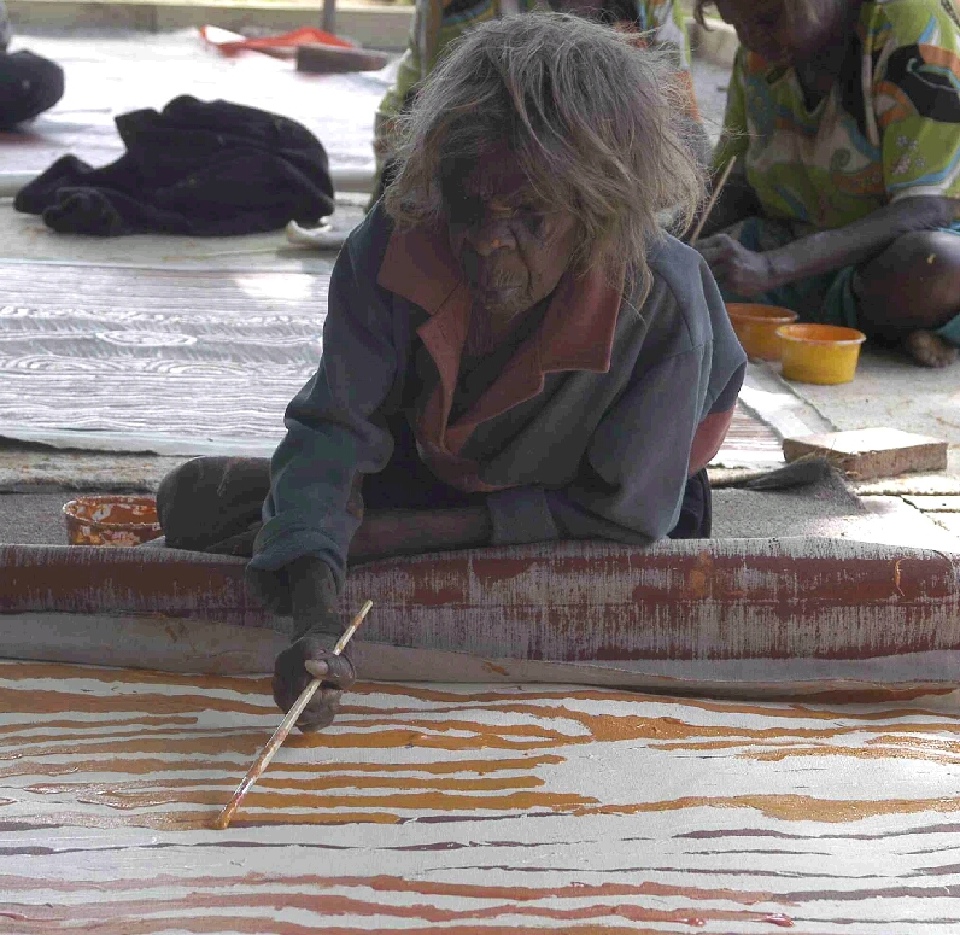
Introduced to acrylic painting in 1995 as part of the Haasts Bluff-Kintore painting project, Makinti quickly developed a distinctive style that embraced spontaneous, fluid interpretations of traditional Pintupi iconography.
Her work is renowned for its dynamic patterns and vibrant colours, often depicting the Kungka Kutjarra (Two Women) stories. These patterns, inspired by the swirling hair-string skirts worn in ceremony, are captured in bold, flowing lines and contrasting colours that evoke the rhythm and vitality of dance.
Makinti's approach to painting was notably different from her contemporaries, focusing on expressive linework and a more intuitive use of colour, in contrast to the dotting style of other Papunya Tula artists. Her work is celebrated for its haptic quality - engaging the senses beyond just the visual - and its ability to convey the spiritual essence of her culture and country.
Makinti's contribution to the art world has been widely recognised. Her work was featured in the landmark 2000 exhibition Papunya Tula: Genesis and Genius at the Art Gallery of New South Wales, and her international profile continued to grow with significant exhibitions such as the 2019 Desert Painters of Australia at Gagosian Gallery in New York, which helped spark renewed global interest in Aboriginal art. In February 2026, Makinti's legacy will be celebrated in a major retrospective solo exhibition in New York, further cementing her continued relevance and broadening her influence on an international audience.
Her accolades include multiple listings in Australian Art Collector magazine's Top 50 Collectable Artists (2003-2006), as well as the prestigious National Aboriginal and Torres Strait Islander Art Award (NATSIAA) in 2008. Posthumously, she was appointed a Member of the Order of Australia in 2011 for her service to the arts and her role in advancing the Western Desert art practice.
Her works are held in major collections, including the National Gallery of Victoria, Art Gallery of New South Wales, and the Kluge-Ruhe Aboriginal Art Collection at the University of Virginia, USA. Makinti Napanangka's art continues to resonate globally, celebrated for its vibrant expression of cultural narratives, and its innovative approach to form and colour, solidifying her place as one of the foremost figures in contemporary Aboriginal art.
Copyright Kate Owen Gallery, January 2026