
Willy Tjungurrayi
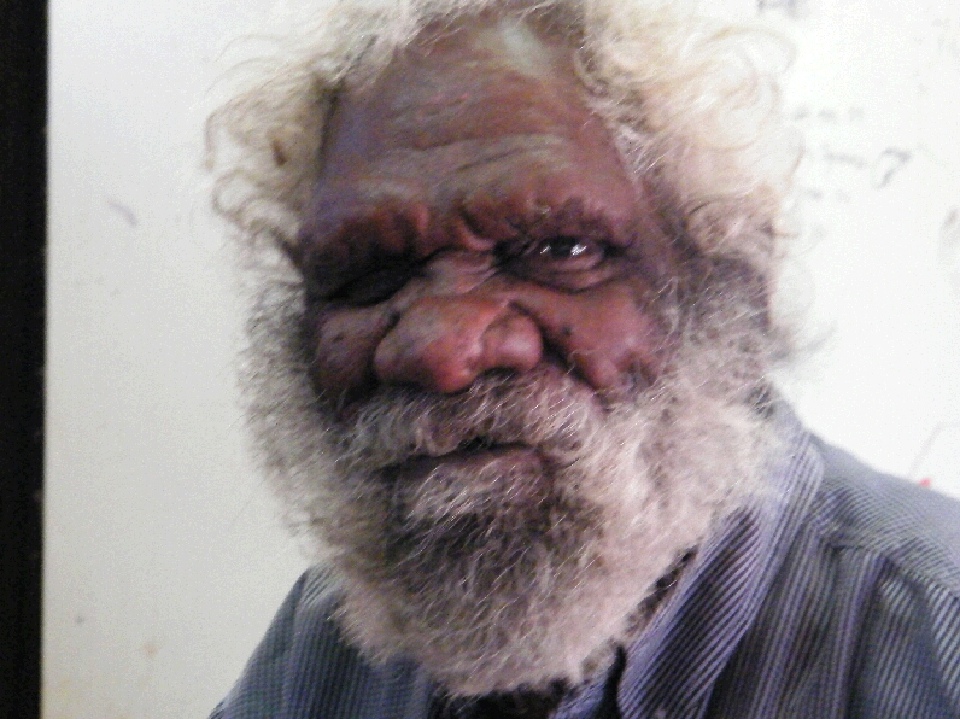
DOB:
c. 1932 - 2018
Born:
Patjantja, NT
LANGUAGE GROUP: Pintupi
COMMUNITY: Kintore, NT
Willy Tjungurrayi (also spelled Tjungarrayi) was a senior Pintupi lawman and one of the most revered masters of the Western Desert's Tingari Dreaming narrative tradition. Born at Patjantja, southwest of Lake Mackay, he grew up under Pintupi ancestral custodianship before coming into Haasts Bluff in 1956 and, due to water shortages, being relocated to Papunya in 1959.
He stood between two notable brothers - Yala Yala Gibbs, a founding figure of the Papunya art movement, and George Ward Tjungurrayi - and together they were custodians of the Tingari songlines, as descendants of Pulpalpulpalnga Tjapaltjarri.
In 1976, just a few years after the Papunya Tula Artists Cooperative was founded in 1972, spurred by the Honey Ant Dreaming mural of 1971, Willy began painting within the cooperative, aligning with its early generation of artists who shaped and defined the Western Desert art movement.
Willy's early works are characterized by bold, flat fields of colour, with concentric circles and parallel lines depicting the ceremonial journeys of the Tingari ancestral beings - expressing ancestral songlines through vivid abstraction. These works chart the rhythms of ancestral travels and ceremonial sites near Haasts Bluff, Lake Mackay (Wilkinkarra), and Lake MacDonald (Kaakuratintja).
As his practice matured, Willy transitioned to a subtler, more refined visual vocabulary: monochromatic ribbons of wavy, rhythmic lines that shimmer across pale backgrounds, evoking desert sand dunes and recounting ancestral tales - particularly the powerful hailstorm episode from Tingari narratives. This transformation reflects his rare ability to blend spiritual authority with formal innovation - melding deep knowledge of law with an abstract sensibility that resonates across time and audience.
Willy's work has been acquired by numerous esteemed public and private institutions, including the National Gallery of Australia, the Art Gallery of New South Wales, Artbank, the Parliament House Art Collection (Canberra), Flinders University Art Museum (Adelaide), and the Holmes a Court Collection (Perth), as well as the Kelton Foundation in the United States. His paintings were included in several landmark exhibitions - most notably the 1983 touring exhibition "Papunya: Paintings from the Central Australian Desert," which traveled through America and Europe, and various seminal shows throughout the 1970s to the 1990s, including "Dot and Circle" at RMIT (1985), "Aboriginal Artists of Australia" (1981), and major museum retrospectives into the late 1980s.
Even after his passing in 2018, his artworks continue to appear at auction, achieving record prices, with notable pieces such as Kaakuratintja sold through Sotheby's New York for US$113,400 in 2022, highlighting the growing recognition of his market and cultural value.
Willy's lasting significance comes from a rare combination: he was both a senior Pintupi custodian of the Tingari Dreaming and an artist who translated sacred knowledge into a powerful and evolving abstract style. His paintings, rare in the market and rich in spiritual resonance, stand as powerful witnesses to country, creation, and the continuing evolution of Indigenous Australian art.
Copyright Kate Owen Gallery, April 2026