Welcome to the third instalment of Emily’s European Summer, or maybe now we should be calling it ‘Emily’s Extended European Summer’.
In our previous articles, we explored the anticipation leading up to the Tate Modern exhibition and reflected on how earlier retrospectives shaped Emily’s legacy. Now, having seen the show in person, our directors and senior art consultants returned with a mix of admiration and unease.
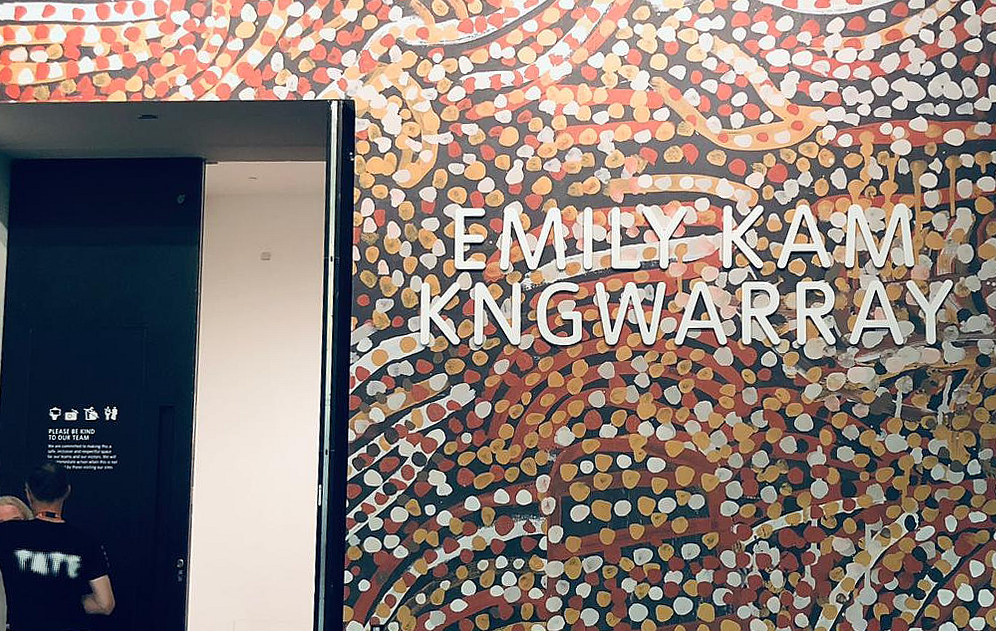
While we had hoped that this final stage of Emily’s journey to London might bring clarity, it seems instead to have prompted even more questions - about what was included, what was omitted, and how these choices were made.
We want to be clear: these questions don’t come from cynicism. They come from care. As advocates and supporters of Aboriginal art, we believe that honest critique is essential if we are to grow as an industry and do justice to the legacies we represent.
None of what follows is intended to diminish the importance of the Tate exhibition. On the contrary, our hope is that by asking difficult questions, we contribute to a deeper appreciation of Emily’s life, work, and enduring influence.
The Exhibition Itself – Beauty and Boundaries
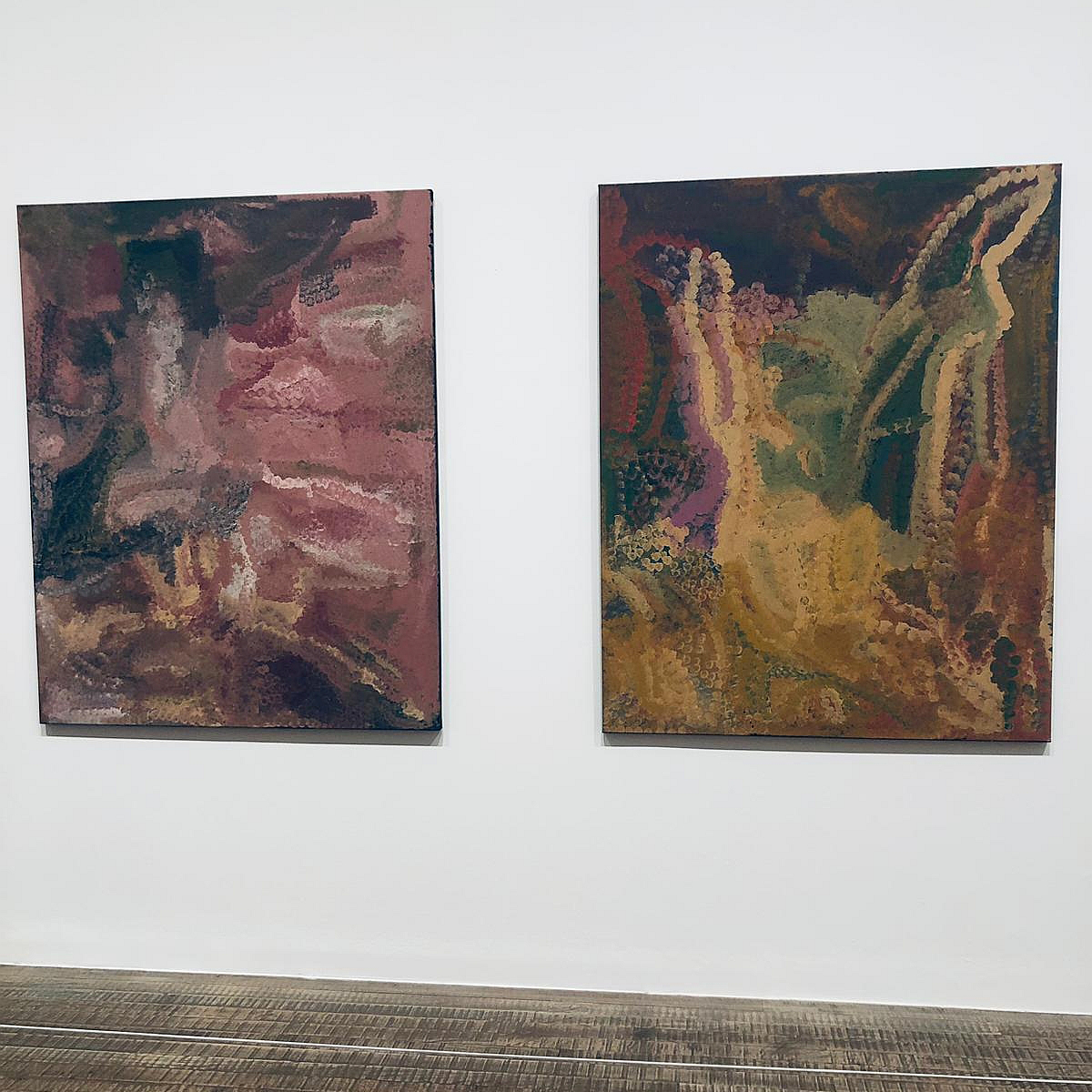
There’s no denying it: Emily’s artworks looked magnificent. Visitors young and old stood mesmerised before her canvases, and it was heartening to see her art captivate a new international audience.
Many critics highlighted the wall text by Jedda Purvis and Josie Kunoth - “If you close your eyes and imagine the paintings in your mind’s eye, you will see them transform. They are real - what Kngwarray[e] painted is alive and true.” Some visitors and arts journalists even returned to the beginning of the show to see her work anew, which perhaps speaks to how powerfully such context can shape interpretation.
The inclusion of archival footage and interviews was also a welcome touch, helping to reframe Emily not as a solitary genius, but as a respected senior woman grounded in community and culture. The curatorial intention - to “re-ground” her art in Country and to highlight the collective strength of her practice - is admirable.
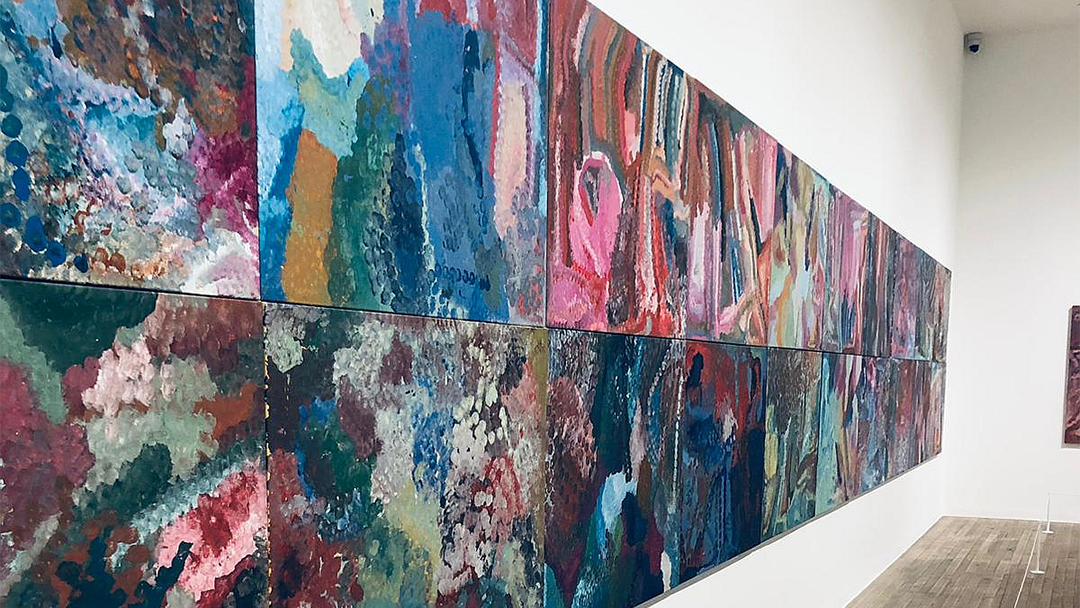
Yet, while the presentation was visually stunning and conceptually well-crafted, we couldn’t help but feel a sense of déjà vu. Much of the exhibition felt like a carbon copy of the 2023 NGA retrospective, but without any visible response to the criticism that show received.
If asked whether this is the most comprehensive Emily exhibition we’ve seen, we would have to say no. Do her paintings shine regardless? Absolutely. But the story is incomplete - and, at times, surprisingly narrow.
It appears that the decision to showcase works from only a limited provenance, resulted in a somewhat uniform display. The energy and variety that so often define Emily’s painting practice seemed muted, even restrained.
We also noticed some new names featured prominently throughout the exhibition, on wall texts, in soundbites, and in the accompanying film. These inclusions came as a surprise, prompting us to learn more about who these contributors are and what their connection to Emily might be. We explore this further in the next section, as it raises important questions about consultation and representation.
Then there’s the gift shop. While it’s not uncommon for major exhibitions to rely on merchandise sales to help offset the high costs of running an international show, we couldn’t help but pause at the sight of Emily’s sacred Dreaming designs reproduced on tea towels, tote bags, and coasters. The question arises: when the exhibition presents these works with such grandeur and reverence, does seeing them distilled into everyday objects undermine the sense of their cultural significance? Perhaps there might have been alternative ways to extend the exhibition’s impact - through thoughtful publications, educational programs, or cultural resources - that could’ve offered a deeper, more meaningful engagement with Emily’s legacy. It’s a subtle tension between accessibility and respect for the sacredness embedded in these works.
Lastly, we were struck by the fact that some individuals prominently featured in the exhibition's narrative have also benefited commercially from the show. While it’s common for various parties to gain from such high-profile events, it does raise the question: when commercial gain becomes so visible, who stands to benefit the most, and who might be left out of the conversation? This raises important considerations about the representation and involvement of key voices in Emily’s story, especially given the absence of direct descendants at key moments, including the exhibition opening.
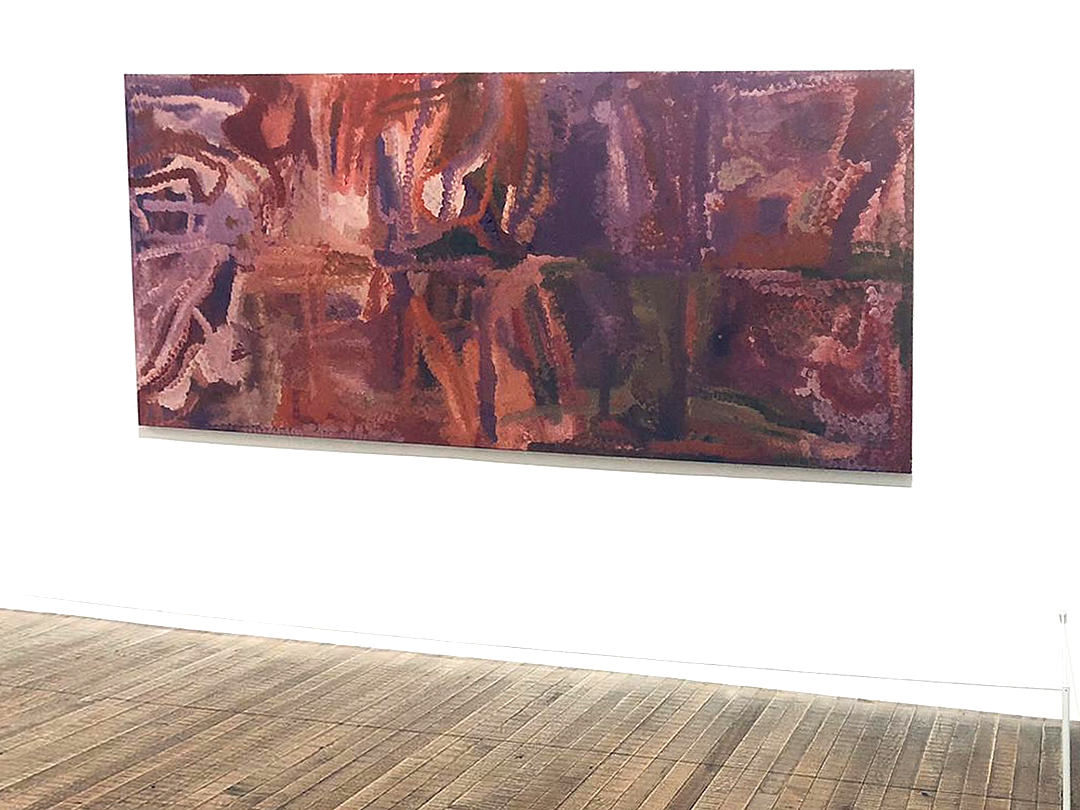
What’s Missing – The Question of Omission
One of the most striking aspects of the Tate exhibition was not what was on the walls, but who was not in the room. As art critic John McDonald observed, there appeared to be no representation from Emily’s closest family at the opening - an omission that felt particularly jarring given how customary it has become for Aboriginal voices to be present at major international events of this kind. Whether this was due to budget, logistics, or oversight, it appeared at odds with the spirit of inclusion that the exhibition otherwise aimed to uphold.
As we noted in our previous article, several of Emily’s most significant works also remain conspicuously absent - Earth’s Creation (1994), the Final Series (1996), and Emily’s Wall (1994–95). These are not only milestones in her career, but key works that offer deep insight into her evolving style, spirituality, and relationship with Country.
Given the scale and prestige of Tate Modern, one might have expected these monumental pieces to be included. Their continued exclusion raises important questions about the curatorial process. If this exhibition aims to be the definitive presentation of Emily’s artistic journey, why have these works been deliberately left out?
Recently, The Art Newspaper quoted Tate co-curator Kelli Cole, who explained that the show focused on works from “the height of Emily’s career,” intentionally omitting paintings created during her later years. While this provides some insight, it also prompts further reflection. Does curatorial selectivity under the international spotlight risk shaping an incomplete legacy, one that focuses more on inference than on the full arc of Emily’s creative life?
It’s difficult not to draw comparisons with Western art history. Would we, for instance, dismiss Monet’s late waterlilies because he painted them while nearly blind? Or overlook Van Gogh’s final works because they were produced amid mental illness? Those late paintings are celebrated as profound expressions of maturity and emotion.
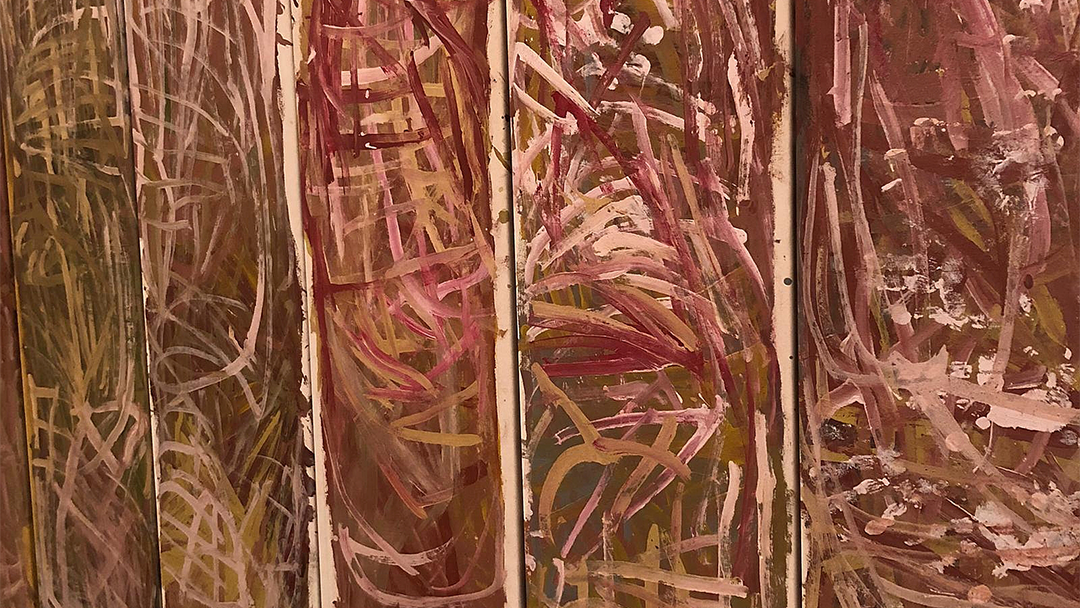
In our view, Emily’s Final Series deserves the same recognition. These paintings demonstrate that as an artist’s physical tools weaken, the creative impulse often strengthens - producing some of the most innovative work of their career. To exclude them is to present an incomplete portrait of Emily’s artistic evolution.
While there were undoubtedly complex social, economic, and cultural contexts in which Emily worked, it appears that curators may sometimes conflate an artist’s physical vulnerability with a loss of artistic merit, a narrative rarely applied to Western artists.
There is nothing inherently lesser about Emily’s later works, and to imply otherwise risks misunderstanding the many motivations behind creation. Artists paint for personal, spiritual, and practical reasons - and for many Aboriginal artists, art sales are an essential means of supporting family and community.
In the article, D’Lan Davidson also referred to two “recognised lines of provenance” - Holt’s Delmore Gallery and Rodney Gooch - as markers of artistic and ethical quality. While both played important roles in Emily’s story, it appears that other provenances once widely accepted and respected have been excluded from this narrative.
[A full list can be found in our FAQs Blog Series, but examples include the Aboriginal Gallery of Dreamings (AGOD) whose long-standing contributions have been notably and, in our opinion, unfairly overlooked.]
Of particular concern is the exclusion of works associated with DACOU (Dreaming Art Centre of Utopia). Founded by Fred Torres and led on the ground by Barbara Weir, both of whom are of Anmatyerre descent, like Emily, along with Alyawarre heritage, their Country is in close proximity to Emily’s.
DACOU was an Aboriginal-owned initiative deeply intertwined with Emily’s practice, care, and legacy. Barbara Weir was one of Emily’s primary carers and travel companions, providing materials, guidance, and support, and her relationship with Emily is even featured in the exhibition’s own supporting film I Am Kam[e].
To suggest, even implicitly, that DACOU’s involvement in Emily’s life and career was less legitimate is not just an oversight - it’s a distortion of history. This isn’t a minor detail; it’s a critical part of Emily’s story that cannot be ignored. The very suggestion that DACOU’s contribution to Emily’s art and life is less relevant than other provenances is not only misleading - it undermines the integrity of the exhibition itself.
This narrowing of provenance raises further questions about influence and market impact. It is interesting to note that some major auction houses now only accept works aligned with the same two ‘recognised’ provenance lines. From the sidelines, it appears that this practice may be making an already niche market even narrower, potentially driving up demand for certain works while devaluing others.
In our opinion, this selective framing is not a mere side issue, it directly harms those who have a rightful stake in Emily’s legacy. The exclusion of DACOU and other provenances impacts Emily’s family, who rely on art sales for much-needed financial support. To see their ancestor’s legacy reduced to a market-driven narrative not only demeans her artistic journey but also undermines Emily’s cultural authority, and the economic stability of the family.
The omission is a tangible loss, as perfectly valid works are, in our opinion, cynically devalued, and the family's rightful connection to Emily’s legacy is diminished. This is not just a matter of market forces, but of cultural integrity and respect for the broader context of Emily’s life and work.
We can’t help but wonder: How would Emily feel seeing some of her work valued over others? What would Emily have said if she was told that works were excluded because her artistic powers were diminished? Would the Curators have had the gumption to even suggest that to Emily?
All her paintings come from her Dreamings, created to share her stories and support her family. Can’t both aspects of her legacy - her cultural significance and her dedication to her family - co-exist without one devaluing the other?
Seeking Answers – Turning to Family Voices
These questions left our team with more curiosity than conclusions. To understand the full picture, our directors travelled to Central Australia to meet with Emily’s family and listen.
It quickly became clear that Emily’s kinship network is intricate: eight lines of descendants through Emily’s siblings and many more through her first cousins, each with many branches and connections through marriage and culture.
Some are close family, others more distant family, while others are connected through extended kinship ties that remain culturally significant. Mapping this network helped us understand not only who “family” is, but also how varied their experiences and perspectives are.
In our discussions, we found warmth, humour, and deep respect - but also a sense of confusion and exclusion. It seems that Emily’s closest family members were not consulted for the Tate show, and when we spoke with them, they described feeling left out of important decisions.
While the consultation list for the exhibition was long, it may not have captured the full complexity of Emily’s lineage. The Tate show credits tell us that the consultation list has missed much of Emily’s closest family and prioritised people who were not only not related, but more importantly, did not come from her country, Alhalkerre.
This, in our opinion, raises important questions about how “consultation” is defined - and who ultimately gets to speak for an artist’s legacy.
The Spelling Controversy – When Consultation Meets Moral Rights
One of the most pressing concerns raised by Emily’s family relates to the spelling of her name. The Tate and NGA exhibitions adopted the spelling “Kam[e] Kngwarray[e],” following linguistic advice and what the exhibition literature advises us was “community consultation”.
But who, exactly, was consulted? We’ve had the opportunity to meet with and consult multiple times with six of the eight lines of descent from Emily’s siblings, as well as descendants of Emily’s cousins. Across the board, they are deeply upset and frustrated about the change and assert that they were either not consulted at all or, if they were, it was not in a way that allowed them to fully understand the significance of the discussion.
If the response from curators is that the change was approved by the community, then more questions arise. Since when has a community been given the right to alter a person’s name against the family’s wishes? And more importantly, which community are we referring to here? Is it the people of Alhalkerre, Emily’s Country, the people of Aknangkerre, an adjoining Country, or another group entirely?
That fact remains that Emily’s clearly stated wishes have not been upheld. Throughout her life, Emily confirmed that she wanted her name spelled “Emily Kame Kngwarreye” - the name under which she painted, exhibited, and achieved international recognition.
In our understanding, this is more than a linguistic adjustment. It touches directly on an artist’s moral rights, authorship, and legacy. As Margo Ngawa Neale, who curated Emily’s 1998 and 2008 retrospectives, has stated, Emily was adamant that her name remains unchanged, aware that linguists might attempt to alter it posthumously.
For Emily, the spelling “Kngwarreye” was not simply a transliteration, but part of her artistic identity - the name the world came to know and celebrate. Moreover, Kame is the name of a Dreaming and relatives have pointed out ‘You cannot change Kame, that is the name of a Dreaming’.
We acknowledge that the written form of Anmatyerre is complex and that scholarly intentions are often well-meaning. However, when all of an artist’s close family with whom we have been able to consult with to this point disagree with such a change, how can it truly be said to reflect proper consultation?
It appears that this situation sits uncomfortably between good intention and miscommunication, and perhaps between curatorial precision and an artist’s moral rights.
If there is any doubt about how Emily wanted her name spelled, one need only look to the gravestone that bears her chosen name:
Broader Implications – Provenance, Consultation, and Legacy
What’s happening here is part of a much wider conversation. Across the global museum sector, institutions are grappling with how to balance scholarship, market forces, and the lived authority of community voices. Aboriginal art - with its deep interweaving of culture, kinship, and Country - adds layers of complexity, but also great opportunity.
In our opinion, major institutions such as the Tate and the NGA now face an important moment of reflection. Both have made curatorial choices that, intentionally or not, have altered the public understanding of Emily’s legacy; through the omission of key works, and the adoption of a name spelling not recognised by much of her family. In our view, this is an unacceptable outcome.
These issues are not confined to one artist or one exhibition. They speak to how we, as an art community, honour the people and cultures we represent. Emily remains a trailblazer in every sense: she catapulted Aboriginal art and culture onto the world stage during her lifetime, and now her work stands at the frontier of how we uphold artistic legacies in a complex, globalised art world.
As the debate continues, we believe this situation must be resolved before confusion seeps into the marketplace. Collectors and audiences alike risk being turned off by uncertainty, politics, and inconsistency. No doubt, the process may be uncomfortable. But for us, the artist’s wishes, her legacy, and her descendants must remain the central focus.
In our view, the question is not about blame, but about balance. Recognition abroad must go hand in hand with respect at home. True celebration of Emily means not only showcasing her art to the world but ensuring that her story - and her family’s voices - are told with integrity and in full.
Continuing the Conversation
Emily Kame Kngwarreye’s art continues to move and inspire people across continents. The Tate exhibition is a testament to that, and we celebrate the visibility it brings. But admiration and accountability can, and should, coexist. Asking questions is not an act of opposition; it’s an act of care.
This series has been a journey - one that has led us to listen more deeply, ask more questions, and seek clarity where confusion persists. While we had intended to conclude by announcing an exhibition celebrating Emily and other remarkable women artists from Utopia, the story has evolved. For now, the most important next step is conversation.
We have been asking a lot of questions throughout this series – the next step is to seek the answers. In the coming months, we will reach out to the relevant parties to seek dialogue and, hopefully, greater understanding around the decisions that have shaped Emily’s legacy.
Because in the end, honouring Emily means more than exhibiting her work - it means standing up for her story, her legacy, and for her family.