Emily Kame Kngwarreye at the Tate: Questions of Legacy, Provenance, and Consultation

Welcome to the third instalment of Emily’s European Summer, or maybe now we should be calling it ‘Emily’s Extended European Summer’.

In our previous articles, we explored the anticipation leading up to the Tate Modern exhibition and reflected on how earlier retrospectives shaped Emily’s legacy. Now, having seen the show in person, our directors and senior art consultants returned with a mix of admiration and unease.
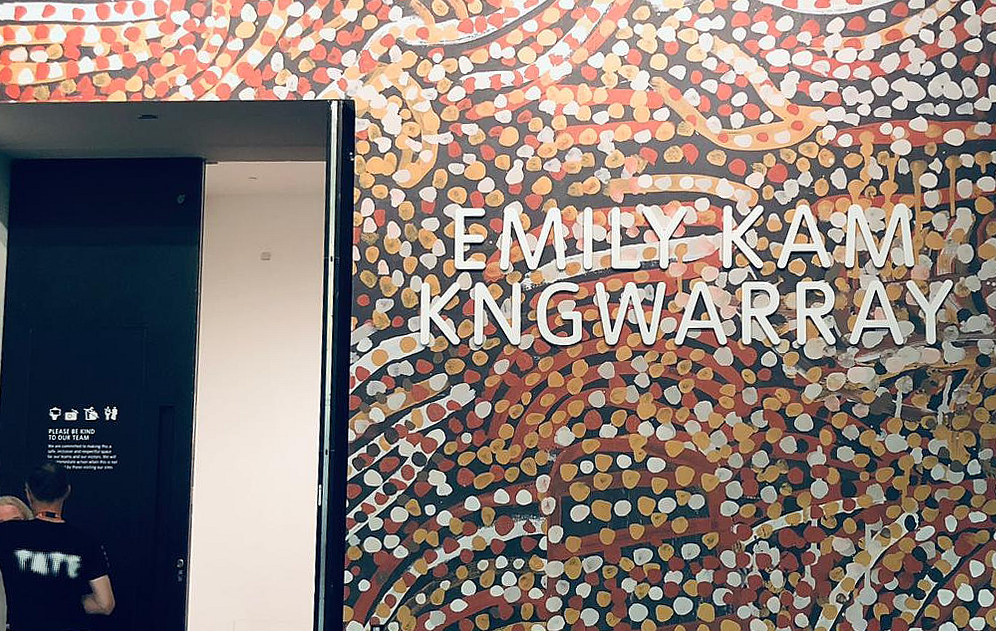
While we had hoped that this final stage of Emily’s journey to London might bring clarity, it seems instead to have prompted even more questions - about what was included, what was omitted, and how these choices were made.

We want to be clear: these questions don’t come from cynicism. They come from care. As advocates and supporters of Aboriginal art, we believe that honest critique is essential if we are to grow as an industry and do justice to the legacies we represent.

None of what follows is intended to diminish the importance of the Tate exhibition. On the contrary, our hope is that by asking difficult questions, we contribute to a deeper appreciation of Emily’s life, work, and enduring influence.

The Exhibition Itself – Beauty and Boundaries

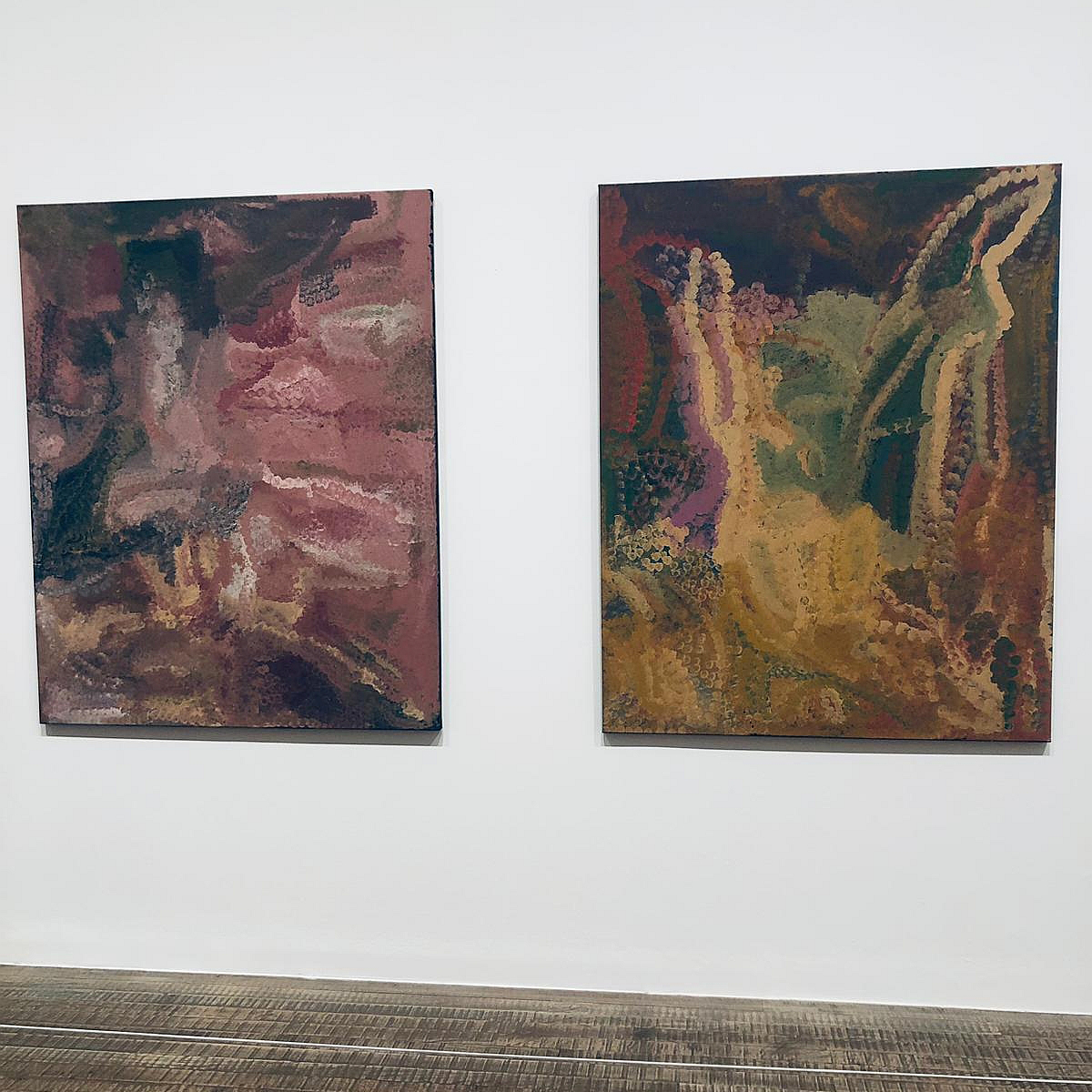
There’s no denying it: Emily’s artworks looked magnificent. Visitors young and old stood mesmerised before her canvases, and it was heartening to see her art captivate a new international audience.

Many critics highlighted the wall text by Jedda Purvis and Josie Kunoth - “If you close your eyes and imagine the paintings in your mind’s eye, you will see them transform. They are real - what Kngwarray[e] painted is alive and true.” Some visitors and arts journalists even returned to the beginning of the show to see her work anew, which perhaps speaks to how powerfully such context can shape interpretation.

The inclusion of archival footage and interviews was also a welcome touch, helping to reframe Emily not as a solitary genius, but as a respected senior woman grounded in community and culture. The curatorial intention - to “re-ground” her art in Country and to highlight the collective strength of her practice - is admirable.
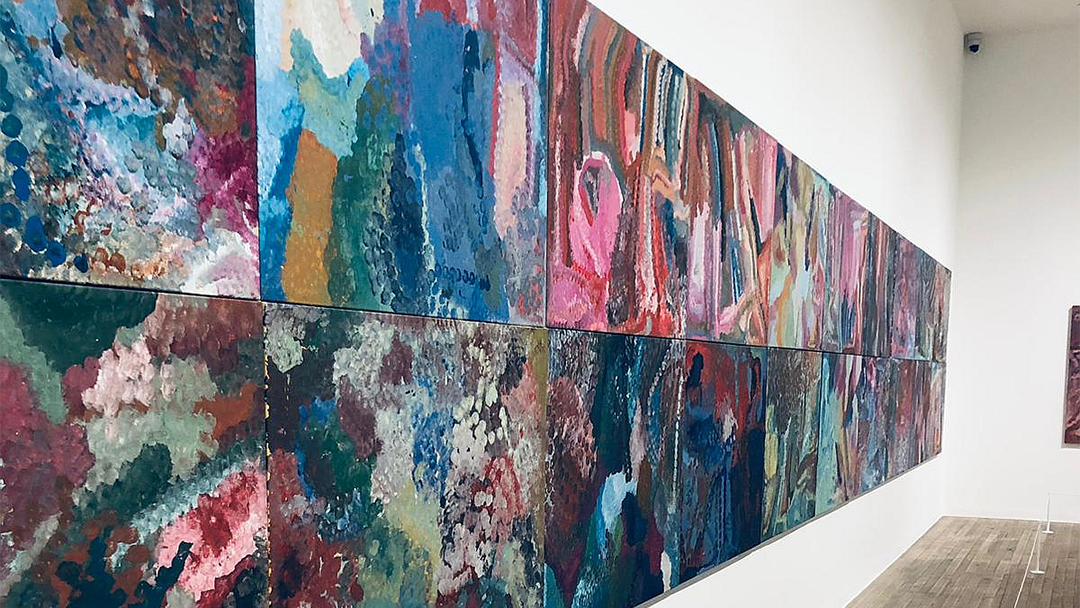
Yet, while the presentation was visually stunning and conceptually well-crafted, we couldn’t help but feel a sense of déjà vu. Much of the exhibition felt like a carbon copy of the 2023 NGA retrospective, but without any visible response to the criticism that show received.

If asked whether this is the most comprehensive Emily exhibition we’ve seen, we would have to say no. Do her paintings shine regardless? Absolutely. But the story is incomplete - and, at times, surprisingly narrow.

It appears that the decision to showcase works from only a limited provenance, resulted in a somewhat uniform display. The energy and variety that so often define Emily’s painting practice seemed muted, even restrained.

We also noticed some new names featured prominently throughout the exhibition, on wall texts, in soundbites, and in the accompanying film. These inclusions came as a surprise, prompting us to learn more about who these contributors are and what their connection to Emily might be. We explore this further in the next section, as it raises important questions about consultation and representation.

Then there’s the gift shop. While it’s not uncommon for major exhibitions to rely on merchandise sales to help offset the high costs of running an international show, we couldn’t help but pause at the sight of Emily’s sacred Dreaming designs reproduced on tea towels, tote bags, and coasters. The question arises: when the exhibition presents these works with such grandeur and reverence, does seeing them distilled into everyday objects undermine the sense of their cultural significance? Perhaps there might have been alternative ways to extend the exhibition’s impact - through thoughtful publications, educational programs, or cultural resources - that could’ve offered a deeper, more meaningful engagement with Emily’s legacy. It’s a subtle tension between accessibility and respect for the sacredness embedded in these works.

Lastly, we were struck by the fact that some individuals prominently featured in the exhibition's narrative have also benefited commercially from the show. While it’s common for various parties to gain from such high-profile events, it does raise the question: when commercial gain becomes so visible, who stands to benefit the most, and who might be left out of the conversation? This raises important considerations about the representation and involvement of key voices in Emily’s story, especially given the absence of direct descendants at key moments, including the exhibition opening.
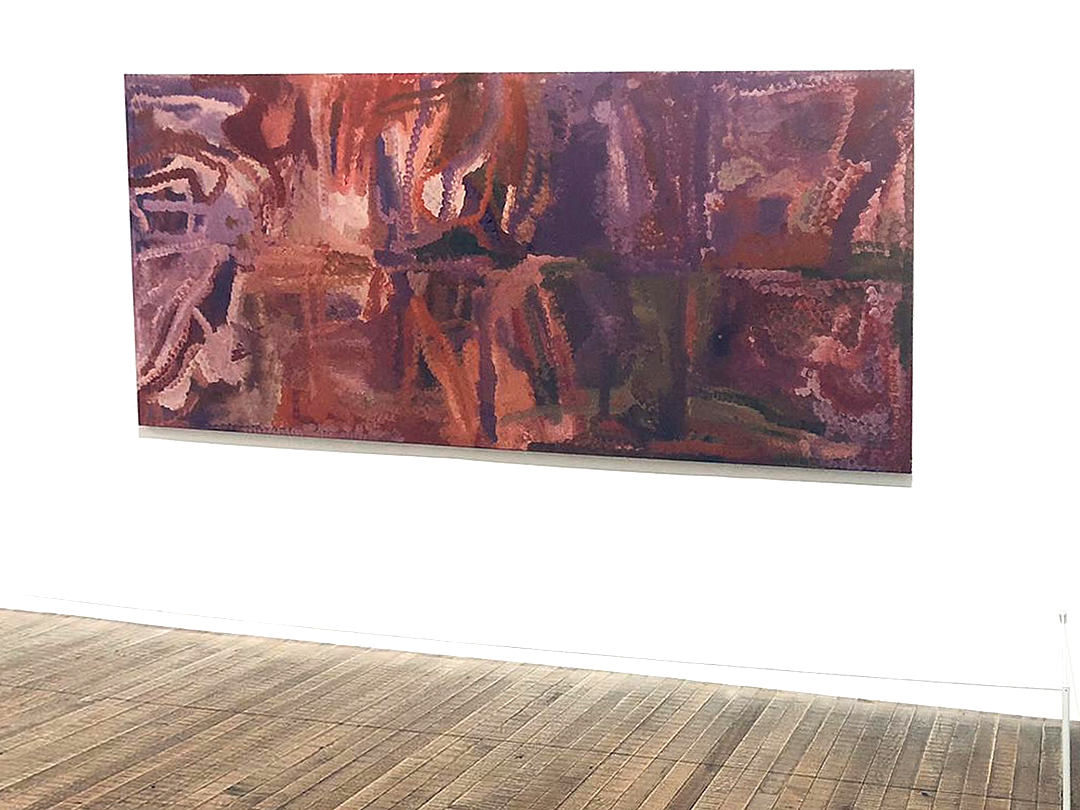
What’s Missing – The Question of Omission

One of the most striking aspects of the Tate exhibition was not what was on the walls, but who was not in the room. As art critic John McDonald observed, there appeared to be no representation from Emily’s closest family at the opening - an omission that felt particularly jarring given how customary it has become for Aboriginal voices to be present at major international events of this kind. Whether this was due to budget, logistics, or oversight, it appeared at odds with the spirit of inclusion that the exhibition otherwise aimed to uphold.

As we noted in our previous article, several of Emily’s most significant works also remain conspicuously absent - Earth’s Creation (1994), the Final Series (1996), and Emily’s Wall (1994–95). These are not only milestones in her career, but key works that offer deep insight into her evolving style, spirituality, and relationship with Country.

Given the scale and prestige of Tate Modern, one might have expected these monumental pieces to be included. Their continued exclusion raises important questions about the curatorial process. If this exhibition aims to be the definitive presentation of Emily’s artistic journey, why have these works been deliberately left out?

Recently, The Art Newspaper quoted Tate co-curator Kelli Cole, who explained that the show focused on works from “the height of Emily’s career,” intentionally omitting paintings created during her later years. While this provides some insight, it also prompts further reflection. Does curatorial selectivity under the international spotlight risk shaping an incomplete legacy, one that focuses more on inference than on the full arc of Emily’s creative life?

It’s difficult not to draw comparisons with Western art history. Would we, for instance, dismiss Monet’s late waterlilies because he painted them while nearly blind? Or overlook Van Gogh’s final works because they were produced amid mental illness? Those late paintings are celebrated as profound expressions of maturity and emotion.
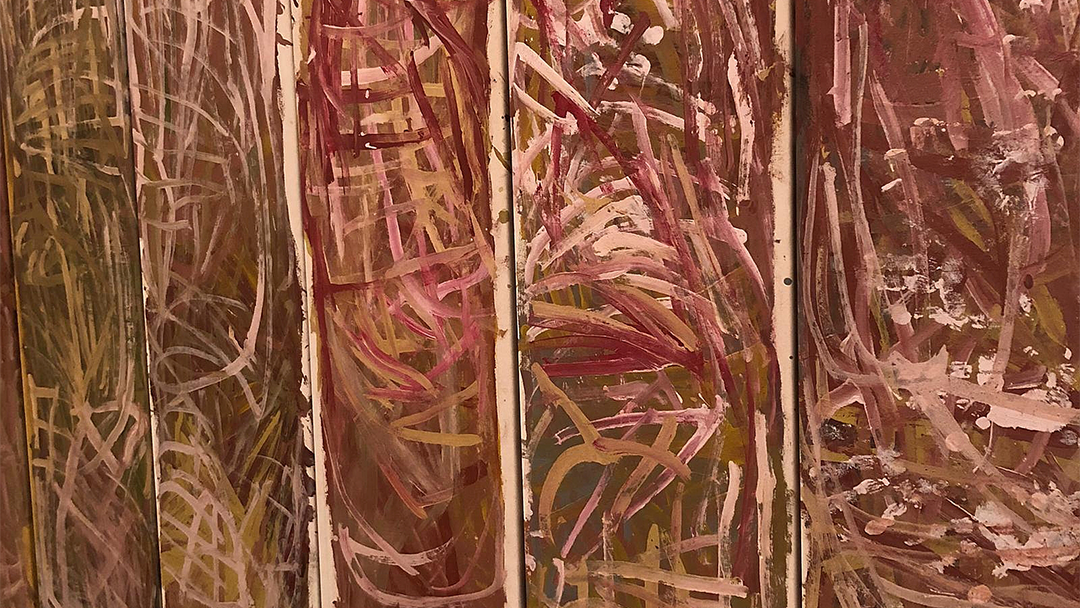
In our view, Emily’s Final Series deserves the same recognition. These paintings demonstrate that as an artist’s physical tools weaken, the creative impulse often strengthens - producing some of the most innovative work of their career. To exclude them is to present an incomplete portrait of Emily’s artistic evolution.

While there were undoubtedly complex social, economic, and cultural contexts in which Emily worked, it appears that curators may sometimes conflate an artist’s physical vulnerability with a loss of artistic merit, a narrative rarely applied to Western artists.

There is nothing inherently lesser about Emily’s later works, and to imply otherwise risks misunderstanding the many motivations behind creation. Artists paint for personal, spiritual, and practical reasons - and for many Aboriginal artists, art sales are an essential means of supporting family and community.

Cole also referred to two “recognised lines of provenance” - Holt’s Delmore Gallery and Rodney Gooch - as markers of artistic and ethical quality. While both played important roles in Emily’s story, it appears that other provenances once widely accepted and respected have been excluded from this narrative.

[A full list can be found in our FAQs Blog Series, but examples include the Aboriginal Gallery of Dreamings (AGOD) whose long-standing contributions have been notably and, in our opinion, unfairly overlooked.]

Of particular concern is the exclusion of works associated with DACOU (Dreaming Art Centre of Utopia). Founded by Fred Torres and led on the ground by Barbara Weir, both of whom are of Anmatyerre descent, like Emily, along with Alyawarre heritage, their Country is in close proximity to Emily’s.

DACOU was an Aboriginal-owned initiative deeply intertwined with Emily’s practice, care, and legacy. Barbara Weir was one of Emily’s primary carers and travel companions, providing materials, guidance, and support, and her relationship with Emily is even featured in the exhibition’s own supporting film I Am Kam[e].

To suggest, even implicitly, that DACOU’s involvement in Emily’s life and career was less legitimate is not just an oversight - it’s a distortion of history. This isn’t a minor detail; it’s a critical part of Emily’s story that cannot be ignored. The very suggestion that DACOU’s contribution to Emily’s art and life is less relevant than other provenances is not only misleading - it undermines the integrity of the exhibition itself.

This narrowing of provenance raises further questions about influence and market impact. It is interesting to note that some major auction houses now only accept works aligned with the same two ‘recognised’ provenance lines. From the sidelines, it appears that this practice may be making an already niche market even narrower, potentially driving up demand for certain works while devaluing others.

In our opinion, this selective framing is not a mere side issue, it directly harms those who have a rightful stake in Emily’s legacy. The exclusion of DACOU and other provenances impacts Emily’s family, who rely on art sales for much-needed financial support. To see their ancestor’s legacy reduced to a market-driven narrative not only demeans her artistic journey but also undermines Emily’s cultural authority, and the economic stability of the family.

The omission is a tangible loss, as perfectly valid works are, in our opinion, cynically devalued, and the family's rightful connection to Emily’s legacy is diminished. This is not just a matter of market forces, but of cultural integrity and respect for the broader context of Emily’s life and work.

We can’t help but wonder: How would Emily feel seeing some of her work valued over others? What would Emily have said if she was told that works were excluded because her artistic powers were diminished? Would the Curators have had the gumption to even suggest that to Emily?

All her paintings come from her Dreamings, created to share her stories and support her family. Can’t both aspects of her legacy - her cultural significance and her dedication to her family - co-exist without one devaluing the other?
Seeking Answers – Turning to Family Voices

These questions left our team with more curiosity than conclusions. To understand the full picture, our directors travelled to Central Australia to meet with Emily’s family and listen.

It quickly became clear that Emily’s kinship network is intricate: eight lines of descendants through Emily’s siblings and many more through her first cousins, each with many branches and connections through marriage and culture.

Some are close family, others more distant family, while others are connected through extended kinship ties that remain culturally significant. Mapping this network helped us understand not only who “family” is, but also how varied their experiences and perspectives are.

In our discussions, we found warmth, humour, and deep respect - but also a sense of confusion and exclusion. It seems that Emily’s closest family members were not consulted for the Tate show, and when we spoke with them, they described feeling left out of important decisions.

While the consultation list for the exhibition was long, it may not have captured the full complexity of Emily’s lineage. The Tate show credits tell us that the consultation list has missed much of Emily’s closest family and prioritised people who were not only not related, but more importantly, did not come from her country, Alhalkerre.

This, in our opinion, raises important questions about how “consultation” is defined - and who ultimately gets to speak for an artist’s legacy.

The Spelling Controversy – When Consultation Meets Moral Rights

One of the most pressing concerns raised by Emily’s family relates to the spelling of her name. The Tate and NGA exhibitions adopted the spelling “Kam[e] Kngwarray[e],” following linguistic advice and what the exhibition literature advises us was “community consultation”.

But who, exactly, was consulted? We’ve had the opportunity to meet with and consult multiple times with six of the eight lines of descent from Emily’s siblings, as well as descendants of Emily’s cousins. Across the board, they are deeply upset and frustrated about the change and assert that they were either not consulted at all or, if they were, it was not in a way that allowed them to fully understand the significance of the discussion.

If the response from curators is that the change was approved by the community, then more questions arise. Since when has a community been given the right to alter a person’s name against the family’s wishes? And more importantly, which community are we referring to here? Is it the people of Alhalkerre, Emily’s Country, the people of Aknangkerre, an adjoining Country, or another group entirely?

That fact remains that Emily’s clearly stated wishes have not been upheld. Throughout her life, Emily confirmed that she wanted her name spelled “Emily Kame Kngwarreye” - the name under which she painted, exhibited, and achieved international recognition.

In our understanding, this is more than a linguistic adjustment. It touches directly on an artist’s moral rights, authorship, and legacy. As Margo Ngawa Neale, who curated Emily’s 1998 and 2008 retrospectives, has stated, Emily was adamant that her name remains unchanged, aware that linguists might attempt to alter it posthumously.

For Emily, the spelling “Kngwarreye” was not simply a transliteration, but part of her artistic identity - the name the world came to know and celebrate. Moreover, Kame is the name of a Dreaming and relatives have pointed out ‘You cannot change Kame, that is the name of a Dreaming’.

We acknowledge that the written form of Anmatyerre is complex and that scholarly intentions are often well-meaning. However, when all of an artist’s close family with whom we have been able to consult with to this point disagree with such a change, how can it truly be said to reflect proper consultation?

It appears that this situation sits uncomfortably between good intention and miscommunication, and perhaps between curatorial precision and an artist’s moral rights.

If there is any doubt about how Emily wanted her name spelled, one need only look to the gravestone that bears her chosen name: 


Broader Implications – Provenance, Consultation, and Legacy

What’s happening here is part of a much wider conversation. Across the global museum sector, institutions are grappling with how to balance scholarship, market forces, and the lived authority of community voices. Aboriginal art - with its deep interweaving of culture, kinship, and Country - adds layers of complexity, but also great opportunity.

In our opinion, major institutions such as the Tate and the NGA now face an important moment of reflection. Both have made curatorial choices that, intentionally or not, have altered the public understanding of Emily’s legacy; through the omission of key works, and the adoption of a name spelling not recognised by much of her family. In our view, this is an unacceptable outcome.

These issues are not confined to one artist or one exhibition. They speak to how we, as an art community, honour the people and cultures we represent. Emily remains a trailblazer in every sense: she catapulted Aboriginal art and culture onto the world stage during her lifetime, and now her work stands at the frontier of how we uphold artistic legacies in a complex, globalised art world.

As the debate continues, we believe this situation must be resolved before confusion seeps into the marketplace. Collectors and audiences alike risk being turned off by uncertainty, politics, and inconsistency. No doubt, the process may be uncomfortable. But for us, the artist’s wishes, her legacy, and her descendants must remain the central focus.

In our view, the question is not about blame, but about balance. Recognition abroad must go hand in hand with respect at home. True celebration of Emily means not only showcasing her art to the world but ensuring that her story - and her family’s voices - are told with integrity and in full.
Continuing the Conversation

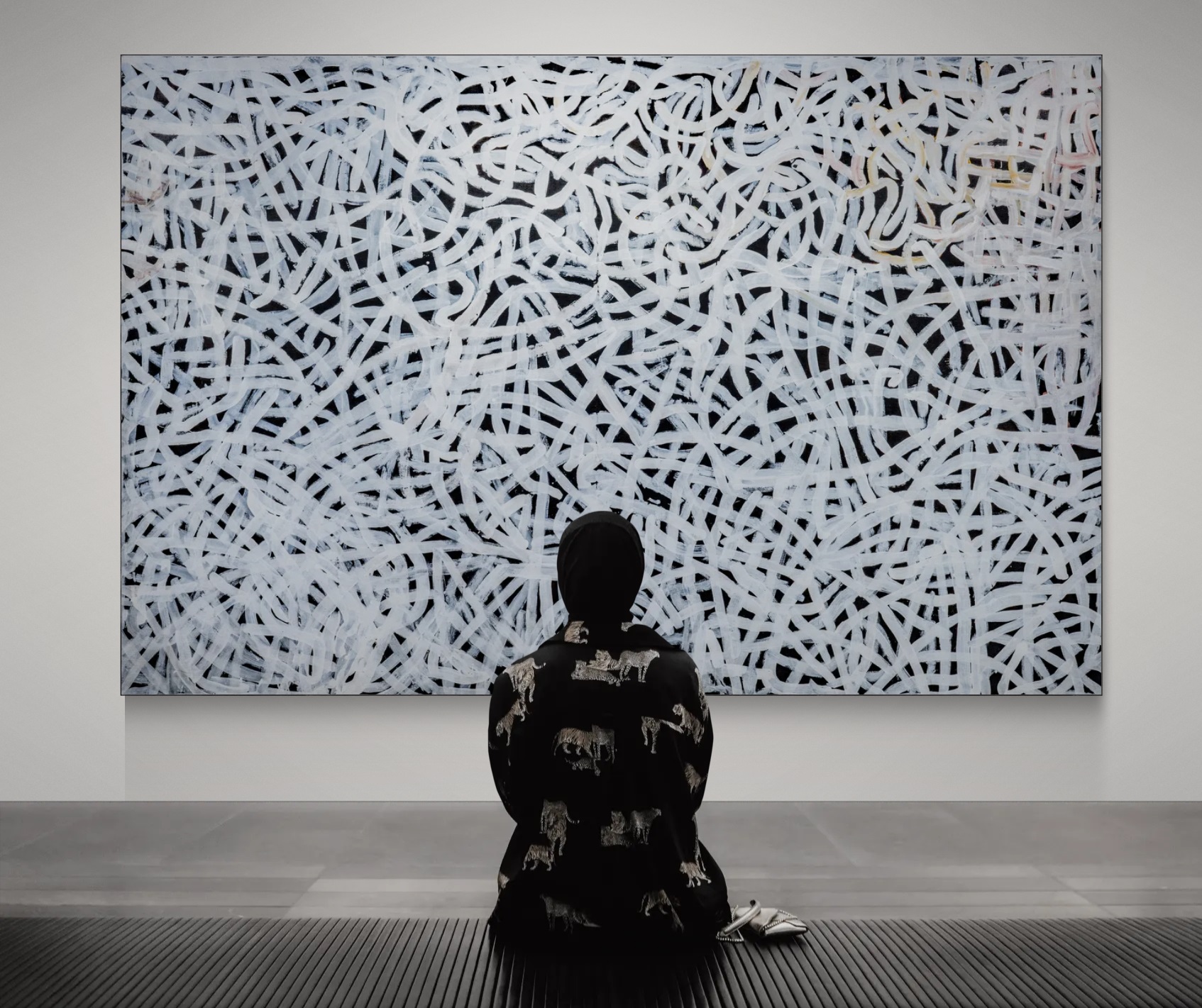
Emily Kame Kngwarreye’s art continues to move and inspire people across continents. The Tate exhibition is a testament to that, and we celebrate the visibility it brings. But admiration and accountability can, and should, coexist. Asking questions is not an act of opposition; it’s an act of care.

This series has been a journey - one that has led us to listen more deeply, ask more questions, and seek clarity where confusion persists. While we had intended to conclude by announcing an exhibition celebrating Emily and other remarkable women artists from Utopia, the story has evolved. For now, the most important next step is conversation.

We have been asking a lot of questions throughout this series – the next step is to seek the answers. In the coming months, we will reach out to the relevant parties to seek dialogue and, hopefully, greater understanding around the decisions that have shaped Emily’s legacy.

Because in the end, honouring Emily means more than exhibiting her work - it means standing up for her story, her legacy, and for her family.


FAQs Series: Emily Kame Kngwarreye

While we’re putting the final touches on the next Emily’s European Summer instalment - packed with new perspectives from the family - we thought we’d answer some of the most frequently asked questions we’ve been receiving about Emily.

In this blog, we’ll help you learn more about the person behind the name, and explore why Emily Kame Kngwarreye remains one of Australia’s most important and influential artists. Plus, for those in the fortunate position of acquiring one of Emily’s works, we’ll touch on what you should be thinking about when it comes to owning a piece of her extraordinary legacy.

Common Questions | Her Value | Provenance Information | Spelling of Her Name

Who was Emily Kame Kngwarreye?

Emily Kame Kngwarreye was an Aboriginal Australian artist of the Alhalkere people, a community from the Utopia region in Central Australia. Renowned for her unique and powerful contemporary art, Emily’s works reflect her deep connection to both her country and culture. She holds the record for the most expensive artwork ever sold by an Australian female artist, a testament to the lasting impact and value of her work.

Best known for her vibrant and abstract painting style, Emily combined traditional Aboriginal cultural symbolism with modern artistic techniques. Her works often depict the land, Dreamtime stories, and the changing seasons of her homeland, bringing a fresh and personal perspective to Aboriginal art while preserving the stories of her ancestors.

When did Emily Kame Kngwarreye start painting?

Emily Kame Kngwarreye began her artistic journey in 1978 as a founding member of the Utopia Women’s Batik Group. In 1988, the Central Australian Aboriginal Media Association (CAAMA) facilitated the group's first project, which resulted in the Utopia – A Picture Story exhibition. That same year, CAAMA introduced the women to acrylic paints on canvas through The Summer Project. Emily's first work on canvas, Emu Woman, was part of this initiative.

Emily's Batiks, installation view at Tate Modern 2025

What did she paint?

Emily Kame Kngwarreye’s artworks encompass a vast array of Dreamings tied to her land and culture. When asked about her paintings, she would often respond simply: “Whole lot, that's the whole lot.”

Her works depicted not only Awelye (women’s ceremonial body painting) but also important totems and stories from her country, including Alatyeye (pencil yam), Arkerrthe (mountain devil lizard), Ntange (grass seed), and Kame (yam seed). These symbols represent the sacred relationship between Emily and her land, where each element—from Tingu (Dreamtime pup) to Atnwerle (green bean)—carries deep cultural and spiritual significance.

Her unique approach combined these Dreamings with her vibrant, abstract style, creating an iconic body of work that speaks to both her heritage and personal expression.

What makes Emily's paintings so valuable in the art market?

Emily Kame Kngwarreye was extraordinarily prolific, creating an estimated 3,000 paintings over a career that spanned roughly eight years. Despite this impressive output, her works are rare in the market today.

Many of her early collectors have held onto their pieces for years, contributing to the limited availability of her work at auction. This scarcity, combined with the high demand for her art, drives up the value of her paintings. The emotional and cultural significance embedded in her work further elevates its desirability, making it all the more valuable when it does become available.


'Kame Colour' by Emily Kame Kngwarreye (1995) 91 x 152cm


How valuable are Emily Kame Kngwarreye’s artworks?

Over the past two decades, the value of Emily Kame Kngwarreye’s artworks has skyrocketed. For instance, her 90 x 120 cm paintings, which sold for AUD $3,500 at an early exhibition in 1990, now routinely fetch around AUD $400,000. This rise in value is driven by limited supply and increasing global demand for Aboriginal art.

Kngwarreye’s works are highly sought after by collectors and institutions worldwide, as recognition of her contributions to contemporary art and Aboriginal culture continues to grow. 

Important Auction Results: High-profile auction results further underscore this.

Earth's Creation I, 1994, 632 x 275 cm
Lot No. 54, Cooee Art (now trading as Art Leven) (NSW), sold in November 2017 for A$2,100,000
Provenance: Commissioned by Dacou Gallery in 1994.

Untitled (Awelye), 1992, 164 x 228 cm
Lot No. 14, Deutscher and Hackett (VIC), sold in March 2025 for A$1,196,591
Provenance: Commissioned by Rodney Gooch/Mulga Bore Artists, Alice Springs, Northern Territory in 1992

Alhalkere - Old Man Emu with Babies, 1989, 152 x 122 cm
Lot No. 40, Sotheby's (NY), sold in May 2022 for ~ A$1,154,045
Provenance: Commissioned by Delmore Gallery in 1989

Earth's Creation I, 1994, 632 x 275 cm
Lot No. 60, Lawson~Menzies (now trading as Menzies) (NSW), sold in May 2007 for A$1,056,000
Provenance: Commissioned by Dacou Gallery in 1994.

Summer Celebration, 1991, 121 x 302 cm
Lot No. 15, Sotheby's (NY), sold in December 2019 for ~ A$863,544.
Provenance: Commissioned by Delmore Gallery in 1991

Earth's Creation II, 1995, 318 x 251 cm
Lot No. 29, Cooee Art (now trading as Art Leven) (NSW), sold in November 2023 for A$859,091
Provenance: Commissioned by Dacou Gallery in 1995.

These results are a testament to the growing investment potential in her work. Collectors who purchased her works in the early 2000s have seen significant returns on their investment.

What Is Provenance, and Why Does It Matter for Emily’s Art?

'Wild Flower' by Emily Kame Kngwarreye (1993) 120 x 90cm
 
Provenance plays a crucial role in establishing the authenticity and value of Emily Kame Kngwarreye’s artworks. It provides a documented history of ownership, ensuring that the work is original. Artworks with strong provenance, particularly those tied to respected galleries, exhibitions, or significant collections, generally command higher prices at auction. A well-documented provenance not only reassures collectors of the artwork’s authenticity but also affirms its legal ownership.
In our view, artworks associated with Delmore Gallery, Aboriginal Gallery of Dreamings (AGOD), Utopia Art (Chris Hodges), Dreaming Art Centre Of Utopia (DACOU), Central Australian Aboriginal Media Association (CAAMA Shop), Mbantua Gallery, Allan Glaetzer and Rodney Gooch should be regarded with equal respect. These individuals, galleries, and organisations have played an essential role in supporting and promoting Emily Kame Kngwarreye, as well as other leading Indigenous artists. Each was actively involved in the commissioning, distribution, and exhibition of Kngwarreye's work, contributing significantly to her legacy.

High-Value Provenance for Emily's Work: Provenance tied to the following individuals, galleries, and organisations is regarded as high-value for Emily Kngwarreye’s work, each playing a critical role in her legacy: 

  • Dreaming Art Centre Of Utopia (DACOU), founded in 1993 by Fred Torres (Barbara Weir’s son), is an Aboriginal-owned and operated gallery that has played a foundational role in promoting Indigenous art from the Utopia region, including Emily Kngwarreye’s work.
  • Aboriginal Gallery of Dreamings (AGOD) is one of the most respected galleries in the Indigenous Australian art community, and was instrumental in promoting Emily Kngwarreye’s career during her lifetime. Beyond this, the gallery commissioned the iconic Emily Wall, a major work that further solidified Kngwarreye’s place in contemporary art history. AGOD’s longstanding dedication to the Utopia artists ensures that works with AGOD provenance are highly respected and well-documented.
  • Utopia Art, led by Chris Hodges, has been a key supporter of the Utopia artists, including Emily. The gallery’s early involvement in promoting her work was instrumental in bringing Emily’s art to a global audience and solidifying her place in contemporary art history.
  • Delmore Gallery, located on a homestead near where Emily’s family lived, has been a key supporter of her work. While the gallery’s property is on a neighboring station and not on Emily’s country, its deep connection to the Utopia region and its unwavering commitment to Indigenous art make works with Delmore provenance highly valued, helping to preserve Emily’s legacy.
  • Central Australian Aboriginal Media Association (CAAMA) has been a vital institution in promoting Indigenous art, with significant involvement in the early stages of Emily Kngwarreye’s career. Its support helped establish Emily’s international recognition, making CAAMA provenance an important part of her artistic history.
  • Mbantua Gallery, based in Alice Springs, is exclusively dedicated to showcasing art from the Utopia region. With a collection of over 50,000 artworks from Utopia, the gallery has long been a key supporter of Emily Kngwarreye and other artists from the area. Notably, Mbantua was the gallery that acquired Earth's Creation when it first broke auction records and later displayed it in their museum. This significant acquisition reflects their ongoing commitment to Emily’s legacy and their central role in promoting the Utopia artists both locally and internationally.
  • Names Such as Rodney Gooch & Allan Glaetzer - Provenance details for Emily’s works may often include names such as Rodney Gooch and Allan Glaetzer. Gooch was instrumental in establishing a national network of art dealers and fostering relationships that helped elevate Utopia art onto the national stage. His strategic work in the 1980s - particularly the A Picture Story and A Summer Project exhibitions - was crucial in introducing Utopia artists to a national audience. Later, Gooch became an independent art dealer, continuing his involvement with the region’s artists.

    Allan Glaetzer, originally the store manager at Utopia, played a pivotal role in the development of Utopia Batik and Art, a project he established in collaboration with the Community Council that ran through the early 1990s. After Rodney Gooch left as the arts advisor for the community, Glaetzer took on the role and later worked for the Central Land Council (CLC). His contributions were essential in shaping the direction of Utopia art and ensuring its long-term success within Australia and internationally.

Why Provenance Matters:  Provenance is not just a record of ownership - it’s a reflection of the relationships, care, and cultural integrity behind the work. Individuals, galleries, and organisations like the ones mentioned above have long been part of Emily’s artistic journey, and their support goes beyond commerce; it is about preserving and sharing her legacy. As some auction houses may emphasize Delmore Gallery provenance due to its meticulous cataloging practices, it’s crucial to note that the provenance sources listed above are equally significant. Provenance from these galleries assures buyers that they are acquiring a piece that is not only authentic but also a meaningful part of Emily’s ongoing legacy in the art world.

How do you spell her name?

Emily wanted her name spelled Emily Kame Kngwarreye. Prior to her death, she confirmed this spelling, which is also inscribed on her gravestone. The family we have spoken to in recent weeks has confirmed that this remains the preferred spelling of her name.

At Kate Owen Gallery, we fully respect Emily's wishes, as well as the wishes of her family. We see no other way her name should be spelt, and we are committed to honoring this in all our dealings with her legacy.

While alternative spellings have emerged, often driven by academic or linguistic frameworks, we believe it is essential to uphold the name Emily chose for herself. This is a core part of the respect we have for her and her family's wishes.

This topic will be explored further in our upcoming article.


We hope you have enjoyed these insights and look forward to sharing our next instalment with you soon!


Emily's European Summer - Part 2

Emily Kame Kngwarreye’s Exhibition Legacy: What Came Before the Tate Show?

As the Tate Modern prepares to present its major survey of Emily Kame Kngwarreye’s work, it’s essential to look back at the exhibitions that have shaped how her legacy has been understood - and how that legacy continues to evolve. In particular, we take a close look at the 2023 National Gallery of Australia (NGA) retrospective, which forms the foundation of the upcoming Tate show.

One of the most important exhibitions in Emily’s legacy to date was the 2008 exhibition Utopia: The Genius of Emily Kame Kngwarreye, developed by the National Museum of Australia and presented at major galleries in Japan before returning to Canberra.

Showcasing 120 works drawn from over 60 public, private, and corporate collections, it was the most comprehensive exhibition of Emily’s work ever assembled to that point. It charted the full arc of her brief but explosive career, from her first canvas in 1988 to her final works in 1996, revealing a deep visual and conceptual continuity from beginning to end.

This exhibition was not just about the paintings themselves. It was grounded in community, supported by an Indigenous reference group, and shaped by extensive consultation. A key figure in that process was Barbara Weir, Emily’s niece and a respected artist.

Fluent in language and protocol, Barbara played a critical role in connecting the curatorial team to the right people, places, and stories - even during a politically fraught time in the Northern Territory. She introduced curator Margo Ngawa Neale and the Ronin Films team to senior custodians and close relatives, helped secure invaluable cultural content, and smoothed the path for respectful engagement.


Barbara passed away in January 2023, just before the NGA exhibition opened. While she was no longer with us to participate in this latest project, the consultative process had already been underway for some time. Her absence is deeply felt - not only because of her pivotal role in past exhibitions, but because she was an extraordinary woman, artist, and cultural bridge.

Her son, Fred Torres, a trailblazing Indigenous art dealer, also contributed significantly to the 2008 project. Both Barbara and Fred travelled to Japan for the opening alongside artist Gloria Petyarre, representing Utopia with strength and pride. Gloria performed songs and dances connected to Emily’s Country, giving many Japanese visitors their first experience of Aboriginal culture. Their presence was more than symbolic -it was an embodiment of the community connection that underpins Emily’s work.

It is striking, then, to note the absence of these same figures from the NGA’s 2023 retrospective and the forthcoming Tate exhibition. Despite Fred’s pioneering role and the fact that his collection formed part of the 2008 show, he is not acknowledged in the 2023 catalogue. Nor is Margo Neale, who curated both the 1998 and 2008 retrospectives. What does it say when those who helped shape and protect Emily’s legacy are no longer part of the conversation?


Some photos of the 2023 NGA Exhibition

Curatorial choices shape public perception. One of the most glaring aspects of the 2023 NGA retrospective was the omission of three major milestones in Emily’s career: Earth’s Creation (1994), her remarkable Final Series of 24 small paintings completed in just three days, and the absence of Emily's Wall (1994–95), a monumental project conceived and commissioned by prominent art dealer and collector Hank Ebes.

Emily's Wall was painted over the course of a year and depicts a seasonal cycle in Kngwarreye’s Country. Each work was completed in a single week, resulting in an expansive, immersive body of fifty panels that flank a monumental centrepiece, with additional long, narrow works representing the wet and dry seasons. Before work commenced, the consent of Traditional Owner Greeny Purvis Petyarre was sought and granted - a significant act of cultural authority and respect. The project was carefully documented, including Emily’s process of mapping out the sequence of the wall. The scale and ambition of this work is extraordinary, and Tate Modern - one of the few galleries with walls large enough to accommodate it - would have been an ideal venue to showcase such a masterpiece.

The NGA’s own multi-panel work, The Alhalker Suite (1993), is justifiably admired and forms a key part of their display. Yet one cannot help but wonder what it might have meant to include both of these major wall installations in the Tate show. What an extraordinary opportunity it could have been for audiences to experience the breadth of Emily’s vision through these two monumental projects, each underpinned by meaningful consultation and storytelling.

Earth’s Creation is arguably Emily’s most famous and monumental painting - acclaimed for its power, scale, and expressive energy. Its absence from the exhibition is perplexing, particularly given that there appears to be no issues surrounding authenticity or access. The work is currently held by respected collectors Nicola and Andrew Forrest and has been widely exhibited. If provenance is the concern - as some have suggested - it raises uncomfortable questions about curatorial gatekeeping and whether artworks are being assessed by their market path rather than their merit.

Equally troubling is the omission of Emily’s Final Series. These 24 paintings, completed shortly before her passing, offer an emotionally resonant conclusion to her career. One of these works was prominent enough to grace the cover of the 2008 Japanese catalogue, yet the entire series is absent from both the 2023 NGA show and the upcoming Tate exhibition. The result is a narrative that ends abruptly, severing a vital chapter of Emily’s creative journey.


A selection of 'The Final Series' hung at The Lume Exhibition, 2023 & the 2008 Exhibition Catalogue Cover 

If the goal is to present a true retrospective, these exclusions are difficult to reconcile. The public loses out - not only on seeing some of Emily’s most profound works, but also on understanding the full arc of her practice. When curators allow biases around provenance or artist representation to dictate inclusion, it is ultimately the artist’s legacy that suffers.

These are especially pressing questions when one considers the change in the spelling of Emily’s name. The 2023 NGA and Tate exhibitions have adopted the spelling "Emily Kam Kngwarray," a decision that has caused division. While curators say the change reflects linguistic standards and community consultation, others have questioned whether the artist’s own wishes have been respected.

Margo Ngawa Neale, who curated Emily’s 1998 and 2008 retrospectives and worked closely with her, has stated that Emily was adamant her name remain unchanged. She was aware that linguists might try to alter it posthumously, but insisted it stay the same - because that was the name the world knew her by. Neale considered it supremely disrespectful to override that wish.

Her gravestone, after all, reads “Emily Kame Kngwarreye” - a lasting and personal testament to how she wanted to be remembered. For her family, this isn’t just a question of orthography; it’s about legacy, love, and respect. Are we witnessing a situation where academic accuracy is being prioritised over the personal - over the wishes of the artist herself and her family, who knew and loved her? 

Charmaine Pwerle, Barbara Weir’s daughter, is another glaring omission. A highly accomplished artist and initiated woman in her own right, Charmaine grew up on Country, worked with the Urapuntja Land Council, and witnessed Emily painting firsthand. She has also worked for a leading Melbourne gallery, served as a Director and Member of the Aboriginal Cultural Council for the Aboriginal Art Association of Australia, and has long been an active advocate for artists' rights and industry standards.

Despite this deep connection to both community and the art world, Charmaine is not included in the curatorial framework of the current exhibitions. Instead, Emily’s legacy is largely presented through the lens of the newly established Utopia Art Centre, which only opened in 2020.

While the centre describes itself as providing a safe and ethical space for artists - particularly in contrast to past dealer-led models - Utopia has historically been a region defined by its independent artists and self-determination. Emily herself chose to work independently, as do many others.

To present her legacy solely through the voices of a small and recent subset of that community, while excluding influential independent artists like Charmaine, seems an unfortunate narrowing of perspective. It would have been powerful to include her voice in the dialogue - both as someone shaped by Emily’s legacy, and as someone shaping the future of Utopia art. Her omission feels less about merit, and more about method - how she chooses to work - and that, in itself, raises important questions about inclusivity and representation.

Even the claim that this is the "first time European audiences will experience a comprehensive showcase" of Emily’s work is worth questioning. In 1999, renowned collector Hank Ebes curated a major exhibition of Emily’s work at Amsterdam’s Oude Kerk. The show drew massive crowds and was a significant moment for Aboriginal art in Europe. Yet neither that exhibition nor Ebes' works are referenced in the current narrative.


The 2023 NGA retrospective catalogue includes a timeline described as a "selected overview of the events impacting and shaping Emily's life." While it doesn’t aim to list every exhibition, the omission of a major early solo European show is nonetheless surprising. Especially when compared to the inclusion of more recent developments, like the establishment of the Utopia Art Centre in 2020.

And while the 2022 exhibition Emily: Desert Painter of Australia at Gagosian Paris is included in the timeline, it raises another important question: is this Tate Modern exhibition truly the "first" of its kind in Europe - or simply the first since the global market’s interest in Emily’s work has surged? Once again, we are left wondering whether curatorial choices are subtly privileging certain forms of provenance or institutional relationships over others.

None of these observations are meant to diminish the importance of the Tate show. Our greatest hope is to see Aboriginal art appreciated, celebrated, and understood globally. We believe that exhibitions like this have the power to shape how the world sees Indigenous art and culture.

But with that power comes responsibility - to ensure that representation is inclusive, consultation is genuine, and the most significant works and voices are honoured.

We don’t raise these questions to divide or criticise for the sake of it. We raise them because we believe constructive critique is essential if we want to grow as an industry and do justice to the legacies we are privileged to present.

Members of the Kate Owen Gallery team will be visiting the Tate show, and will share their personal reflections on the exhibition in the next article in this series. If you happen to be visiting the Tate Modern and see the show for yourself, we’d love to hear your thoughts too. Feel free to reach out at hello@kateowengallery.com. 


Emily’s European Summer - Part 1

A Critical Look at the Tate’s Upcoming Exhibition

This year marks a significant moment for Aboriginal art on the international stage as the Tate Modern in London prepares to host a landmark exhibition dedicated to Emily Kame Kngwarreye (c.1914-1996). The Tate is framing the exhibition as “the first time European audiences will experience a comprehensive showcase of one of Australia’s most celebrated artists”. But as we anticipate this major event, we also feel the need to ask important questions about the way her work is being presented.

At Kate Owen Gallery, we are deeply invested in the recognition and appreciation of Aboriginal art, and we welcome the Tate’s efforts to bring Emily’s work to a global audience. However, with the exhibition drawing heavily from the National Gallery of Australia’s (NGA) 2023 retrospective, we wonder: what stories will this exhibition tell, and what stories will be left untold?

In this series, Emily’s European Summer, we explore the broader context of Emily Kame Kngwarreye’s exhibition history - from her previous appearances in Europe, to the pioneering 2008 National Museum of Australia’s (NMA) exhibition and tour to Japan, and the 2023 retrospective that forms the foundation for the Tate show. We will examine curatorial choices, discussing which works have been included, which have been omitted, and what impact these decisions have on the narrative presented to an international audience.

One significant concern is the selective consultation and representation of Emily's family, reason being Family is everything in Indigenous culture. While some family members have been featured prominently in the 2023 NGA and Tate exhibitions, others - including individuals who were instrumental in the success of the 2008 NMA show and whom we have proudly represented at Kate Owen Gallery - appear to have been omitted.

This raises broader questions about how institutions determine whose voices are heard, and how those choices affect the telling of Emily’s story. Another point of discussion is the change in the spelling of her name in the 2023 NGA and Tate exhibitions, raising questions about how institutions shape an artist's legacy.

This blog series will also take a critical look at the exhibition itself when we visit in a few weeks. How does the Tate position Emily within the art world? Does it fully honour the complexity of her artistic evolution and deep cultural connections? How does it address issues of provenance and consultation with her family and community? These are questions we believe must be asked whenever Aboriginal art is presented on the world stage.

Our greatest hope is to see Aboriginal art appreciated, celebrated, and understood globally. We believe that exhibitions like this have the power to shape the way the world sees Indigenous art and culture. But with that power comes responsibility - to ensure that representation is not shaped by bias, that the finest works are chosen based on artistic merit rather than curatorial preferences, and that diverse Indigenous voices are heard and respected throughout the process.

As we embark on this critical journey, we invite you to join us in questioning, celebrating, and analysing what Emily’s European Summer truly means for the future of Aboriginal art. If you have any questions or points you’d like us to discuss in the next blog, please reach out to us at hello@kateowengallery.com.