Topics on this page:
Cultural Objects | Traditional Sculptural Forms | Modern Interpretations | The Aboriginal Art Movement
Sculpture and carvings have formed part of Australia’s First Nation’s cultural expression for millennia. There is a wonderfully diverse range of styles, materials and techniques used by artists today. Kate Owen Gallery is proud to market a fantastic selection of imaginative and original sculptures.
View Aboriginal Sculptures
Aboriginal Cultural Objects
What are Indigenous Cultural Objects?
This is the term used to describe objects in collections that originate from Indigenous cultures. The objects were made to be used from basic everyday needs through to ceremonial purposes. Indigenous cultural objects can be found in museums, private collections and in research settings such as universities and anthropological settings.
Previously, the term ‘ethnographic’ had been used, however it has fallen out of favour in Australia. What makes Aboriginal cultural objects so special is that it is part of a living culture as opposed to static items. They contain so much cultural heritage such as ancient stories, language, song, and practices.
Australian Aboriginal Cultural Objects
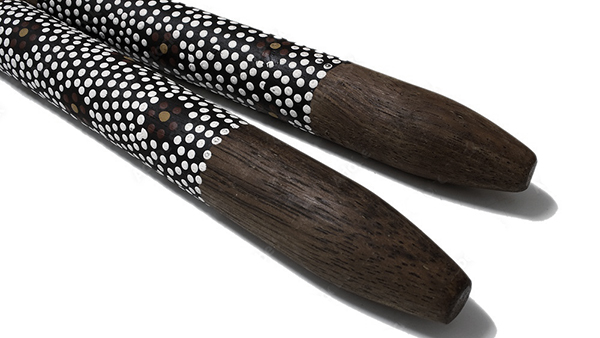
There is an incredible richness and diversity in traditional Aboriginal cultural objects. These include spears, shields, coolamons, ceremonial carvings and attire such as armbands, pendants and headdresses.
In many instances, the objects were multi-purpose and could be used for a variety of different functions. They are made from materials such as bark, string, feathers, animal bones, shells, human hair, or other fibres. These objects provide evidence of the diverse values, activities and knowledge of Aboriginal people who co-existed with the natural environment since time immemorial.
Revitalisation of Cultural Objects
In recent years, many traditional cultural objects have been celebrated for their aesthetics and have moved from being displayed in a museum setting to a gallery setting. There has also been an acknowledgement that these items are part of a living culture and are still of important cultural significance to Aboriginal people.
This has resulted in an overhaul in the way objects are catalogued, categorized, displayed and cared for in art galleries and museums. There is also an active shift towards Aboriginal led interpretation of objects and co-design of exhibitions. It has led to a revival of these cultural objects and we as a nation are benefitting from hearing the stories behind these objects.
Sacred Objects
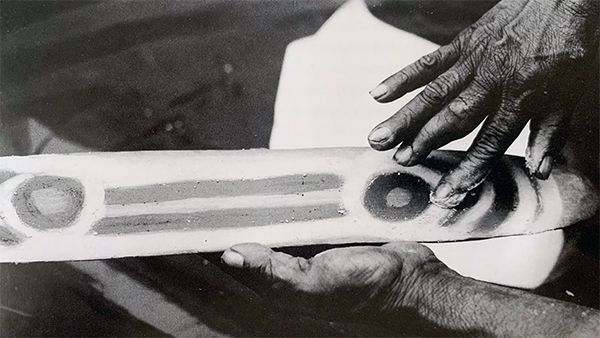
Of course, some traditional Aboriginal cultural materials are sacred spiritual objects, only to be viewed and interpreted by initiated members of the community. To this day they continue to serve important cultural and ceremonial purposes. For example, the Churinga (also spelt Tjuringa) is an extremely sacred object for the Aboriginal people of central Australia. Out of respect for this living culture, display of these objects and detailed public information about these objects rarely exists.
Traditional Sculptural Forms
Many contemporary Indigenous Australian artists continue to work in traditional sculptural art forms. They are inspired by Aboriginal cultural objects but have been created with the intention to be viewed by an outside audience and appreciated for their aesthetics. Some artists continue to employ traditional techniques, while others have adopted new methods and materials.
Memorial Poles of Arnhem Land
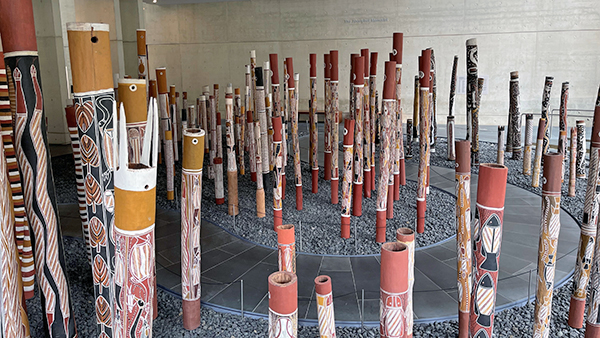
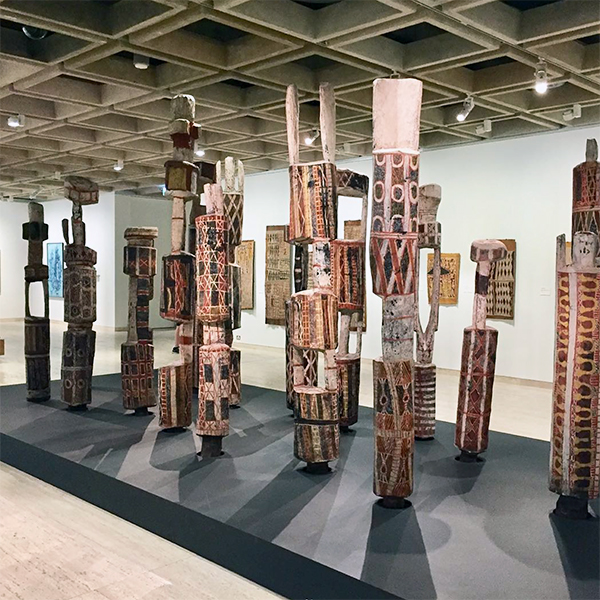
This unique art form received international attention in 1988, in an event which showcased how artists can repurpose a traditional Aboriginal sculptural form. Art advisor and curator Djon Mundine and artists from the Ramingining and neighbouring remote communities of Central Arnhem Land developed the concept of an Aboriginal Memorial. It was to coincide with Australia’s 1988 bicentennial celebrations.
The memorial comprised of 200 Larrakitj memorial poles. The memorial poles’ original function was for mortuary ceremonies and was used to contain the bones of the deceased.
Today, the hollow log coffin form has been repurposed to recognise and celebrate the ancestors and old knowledge systems. It has become a 'canvas' for the sacred designs of each of the many Yolngu clans.
View Larrakitj Memorial Poles
Wood Carvings of La Perouse
In New South Wales, the Timbery Family of La Perouse have created wooden carvings such as boomerangs for visitors to the area since Captain Cook visited in 1770. To this day, the Timbery family continue to demonstrate and sell homemade boomerangs.
Their wood carvings are held in major public museums and galleries throughout Australia. These works are important as they reflect links to land and traditional cultural practices, along with changing circumstances within Aboriginal communities brought about by European invasion. They are also superb examples of how Indigenous Australian communities have used art and craft activities to generate income since contact, often adapting traditional motifs or techniques for this new market.
Browse Art from the East Coast of Australia
Realistic Animals
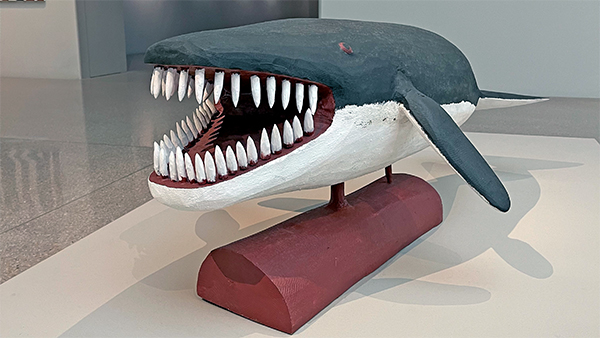
Another popular sculptural form that is widely seen across every region of Australia is realistic looking animals. They can be carved from wood or fashioned out of a variety of materials.
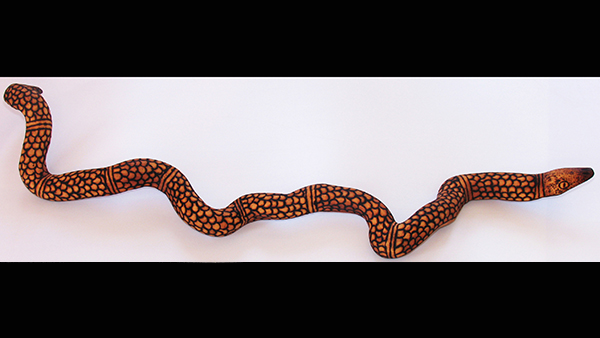
Artists from the central and western desert regions regularly carve desert reptiles and adorn them with designs that are burnt, painted or etched into the wood. Exactly when and where the animal carvings were first made is uncertain, but the practice was encouraged by the Ernabella Mission in the 1950s.
The prevalence of these carvings also increased significantly in Central Australia with the development of tourism at Uluru in the late 1950s. Before the commercial success of Aboriginal art in the late 1970s, the sale of carved animals to tourists enabled local Indigenous communities to develop an independent source of income.
More recently, artists from Warlukurlangu art centre have created vibrant metal camp dog sculptures, which are then hand painted on both sides. Each camp dog is one of a kind and feature individual colours and designs.
The Mimi and Mokuy Figures of Arnhem Land
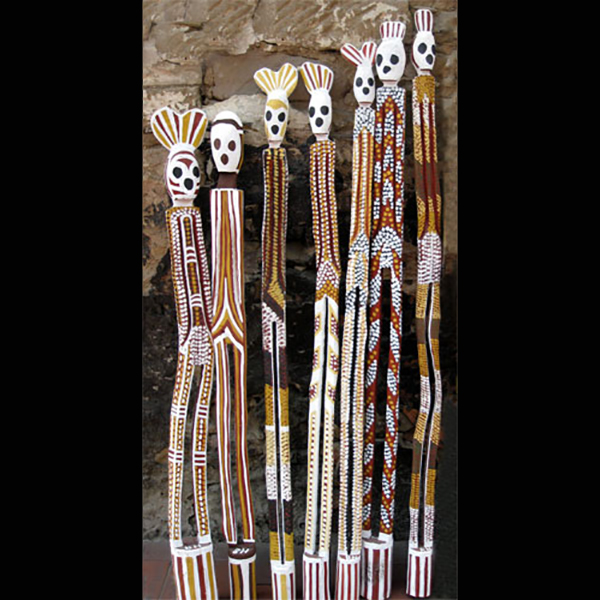
The Mimi spirits are supernatural beings that live in the rocky country of western Arnhem Land. They are traditionally painted in rock art and bark paintings as extremely thin human-like beings. The people of western Arnhem Land believe that Mimi society existed before humans.
Mimis are credited with instructing the first people with knowledge relating to survival in the rocky environment of the Arnhem Land plateau. They also taught the first humans how to hunt and how to dance, sing and paint. Sometimes Mimis are attributed with mischievous and dangerous qualities.
Sculptures depicting the Mimi spirits are usually incredibly thin, long pieces of wood that are decorated in ochre paint. Artists sometimes purposely select pieces of wood with interesting bends and shapes to emphasise the supernatural and cheeky qualities of these characters, as well as their delicate stature.
The Mokuy is a ghost or the sinister spirit of a deceased person. It lives near the burial ground and is believed to harm those who venture too close. They are made in eastern Arnhem Land are derived from square-sectioned and painted grave-post figures called wuramu.
Contemporary carvings by artists such as Nawurapu Wunungmurra speak of cycles, and the strong tradition and culture held within Yolngu customs. His haunting mixed media work Mokuy (which included a series of his Mokuy sculptures) took out first prize in two categories in the 2010 NATSIA Awards.
Figurative Carvings of the Tiwi Islands
Before European settlement of Australia, a lot of the figurative carvings from this region were ephemeral. This means they were created and used for a particular ceremony and then discarded. Early settlers and anthropologists kept these carvings which are now highly collectible.
Contemporary sculptures of this region continue this carving tradition and apply clan designs using ochre paint. For many Tiwi artists, ceremony is a central part of life and so these ceremonial designs have become a wellspring of inspiration for all forms of art.
Torres Strait Sculpture
Dance is a very important form of storytelling in the Torres Strait Islands. Communities have a rich history of creating striking dance ornaments such as the Dhari headdresses and turtle shell masks. They were traditionally made for rituals but have now developed into highly sought-after sculptural art objects. Ken Thaiday Snr is famous for his shark dance headdresses, and his pieces are housed in major public institutions all over Australia.
The contemporary headdresses are seen to be an important mode of cultural revival. They keep the traditional Torres Strait Islander culture dynamic and alive, as well as educate younger generations about their heritage.
Modern Interpretations of Culture and Country
Many artists have developed a distinctive visual language from a combination of traditional and contemporary Aboriginal imagery. They have utilized modern materials and techniques to produce works that are modern interpretations of culture and Country. Below are a few examples.
Lin Onus
Lin Onus (1948-1996) was a trailblazing Yorta Yorta sculptor who combined Aboriginal imagery and Western art practices. His hybrid style spoke across cultures, highlighting points of political and social importance.
His iconic sculpture Fruit Bats at the Art Gallery of New South Wales is made up of a group of bat sculptures decorated with rarrk (
cross hatching), hanging on a Hills Hoist clothes line. Beneath this icon of Australian suburbia are wooden discs with dotted motifs, representing the bat droppings. There is a wonderful irony, wit and whimsy about this piece which has made it a crowd favourite since it was acquired in 1993.
The King Sisters
Gurindji sisters
Tarisse and
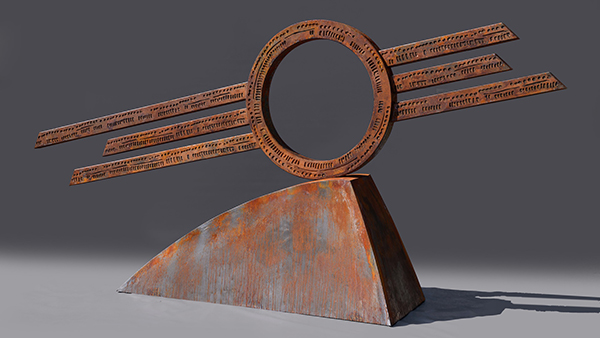
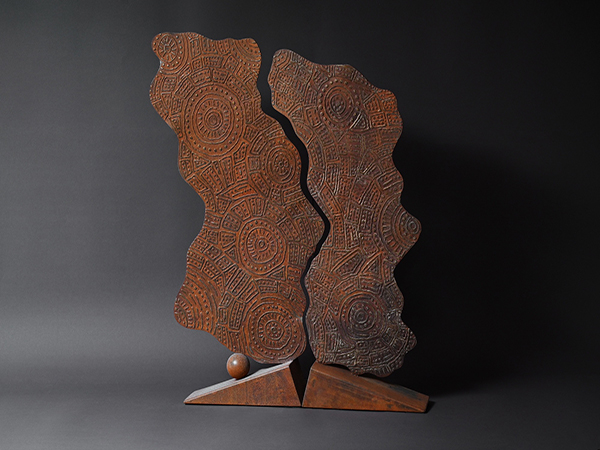
Sarrita King have developed an exciting new range of sculptures. They are an expression of many of the
Dreaming stories and philosophies seen in their painted canvases. Using metal, stone, and wood the artists have been able to draw directly on the elements of the land to express themselves.
Designs found in their paintings, which are loaded with symbolism, become the central element in their abstract sculptures. The King Sisters have masterfully used scale, shape, colour and gestural marks to achieve a striking visual effect.
What makes the King Sisters sculptures so exciting is that they are a fusion of the past, present and future. They represent the next generation of artists who have been influenced by both their Indigenous history, and current Western upbringing. Their sculptures keep their ancestral narrative alive and provide a new way of looking back while looking forward.
Judy Watson’s Public Sculptures
Waanyi artist Judy Watson is a celebrated contemporary artist who works across all media. She was the 2015 recipient of the Australia Council’s visual arts award, and her work is held in major Australian and international collections.
Judy Watson has created many public and site-specific artworks that emphasise the presence and history of Aboriginal Australia. Many of the stories that inform her works are those of women. She acknowledges the crucial role they play in many families and communities.
Highlights include her sculptures at the forecourt of the Sydney International Airport, Reconciliation Place in Canberra and her selection to design architectural elements for the Musee de Quai Branly in Paris.
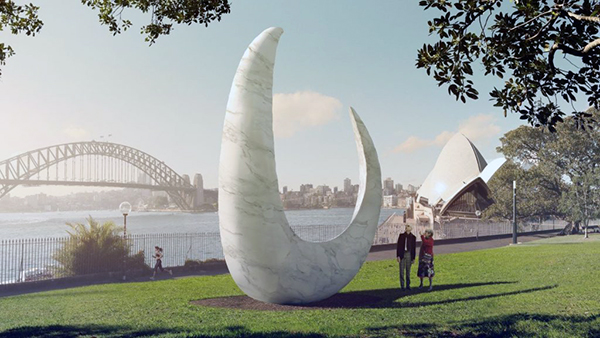
Her latest public sculpture is a six-metre-high monument titled barra (2021) which is the Gadigal word for shell hook. It is located at Bennelong Point on Sydney Harbour.
At first the sculpture appears to be an abstract work which may reflect the shape of the moon, the coves of the harbour, the sails of the Sydney Opera House or the arch of the Harbour Bridge. However it is actually a realistic representation of the fishhooks crafted and used by the Gadigal women of the Eora Nation for thousands of generations.
Judy Watson explains “Bara shell hooks are still being unearthed around these waterways, making themselves known to archaeologists and the community, reasserting the Aboriginal presence and history of the Gadigal people of the Eora Nation.”
Aboriginal public sculpture is a wonderful way to celebrate the living culture and heritage of First Nations people. It is also an important step towards giving the world’s oldest continuing culture a visible and tangible presence in all our towns and cities.
Context within the Aboriginal Art Movement
When retelling the
history of the Aboriginal art movement, many start at 1971 when a young schoolteacher called Geoffrey Bardon arrived at the Papunya settlement, 250 kilometers west of Alice Springs.
Over an 18-month period, he assisted the Indigenous people of Papunya as they developed their own painting styles and representations of their land, culture and ceremonies.
View Art from Papunya Region
It is an important milestone in Australian Aboriginal art. But what is lesser known is that famous central desert painters
Clifford Possum and Tim Leura Tjapaltjarri were brilliant craftsmen in wooden sculptures before ever picking up the paint brush.
It shows us that Australian Aboriginal people have always had a diverse art practice, and contemporary Aboriginal artists today continue to use a wide variety of materials.
The first major commission of an Aboriginal work by a gallery of modern art was in 1958, and it was a sculpture. The Art Gallery of New South Wales commissioned a series of Tutuni or Pukumani graveposts by various Tiwi artists from Melville Island.
When this group of Pukumani poles were displayed in an art gallery for an outside audience, it broke new ground, establishing Aboriginal culture within an art context.
Since then, many galleries and museums around the world have acquired a beautiful collection of Indigenous Australian art. Their collections tell us the history and progression of this art movement.
For the most part, paintings on canvas and linen by trailblazers such as
Emily Kame Kngwarreye have been on display. But, behind the scenes, institutions have also been developing a broad and wide range of other artistic mediums.
In recent years, audiences have been able to reap the rewards of their efforts. Exhibiting spaces now showcase an incredible variety of contemporary Aboriginal artworks. It also helps deepen our understanding of the richness of Indigenous Australian culture.
Just like Aboriginal culture, Australian Indigenous art is organic and constantly evolving. We look forward to more exciting developments in this unique type of Aboriginal art.
Related Topics:
Body Paint and Ceremonial Artifacts
Aboriginal Bark Paintings
Rock Art from the Kimberleys
Aboriginal Art Styles